Objects in Limbo: A Museum Coined a Term for What It Could Not Prove, and It Is Sharper Than the Standard
On a museum that renamed a category of doubt and said why, a registrars manual that has carried a stronger term since 2010, and what each of a dozen words for a missing record actually commits an institution to
This study takes no view on restitution, return, export or origin, on where any object belongs, or on what any institution holding one should do. Those are not questions this institution answers. The Toledo agreement described below is recorded as a fact about an agreement, neither endorsed nor criticised, and no legal conclusion is drawn about the 1970 Unesco Convention, the 2008 adoption of it as museum best practice, or any other instrument named here.
What this study is about is a vocabulary. The field that records ownership has at least a dozen different ways of saying that it does not know something, and they are not interchangeable. They differ in precision, they differ in who coined them, and above all they differ in what an institution is committed to once it uses one. Most of them commit it to nothing at all. The two strongest were not written by standards bodies, and one of them has been sitting in a registrars manual since 2010 doing more work than anybody credits it with.
What Is Established, With Its Dates
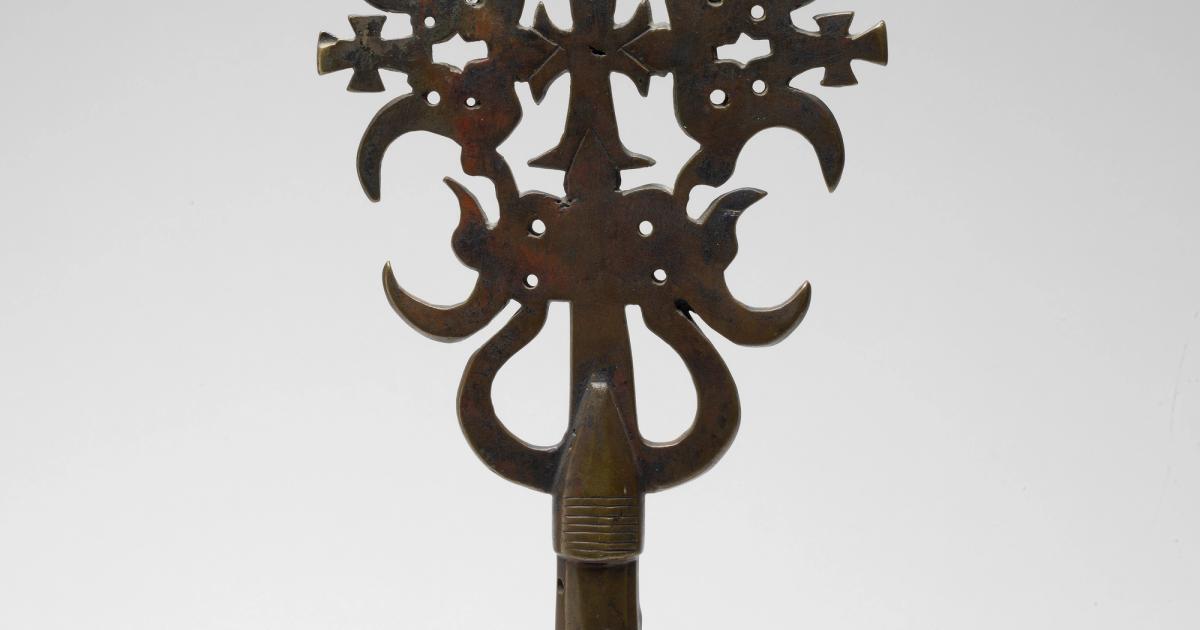
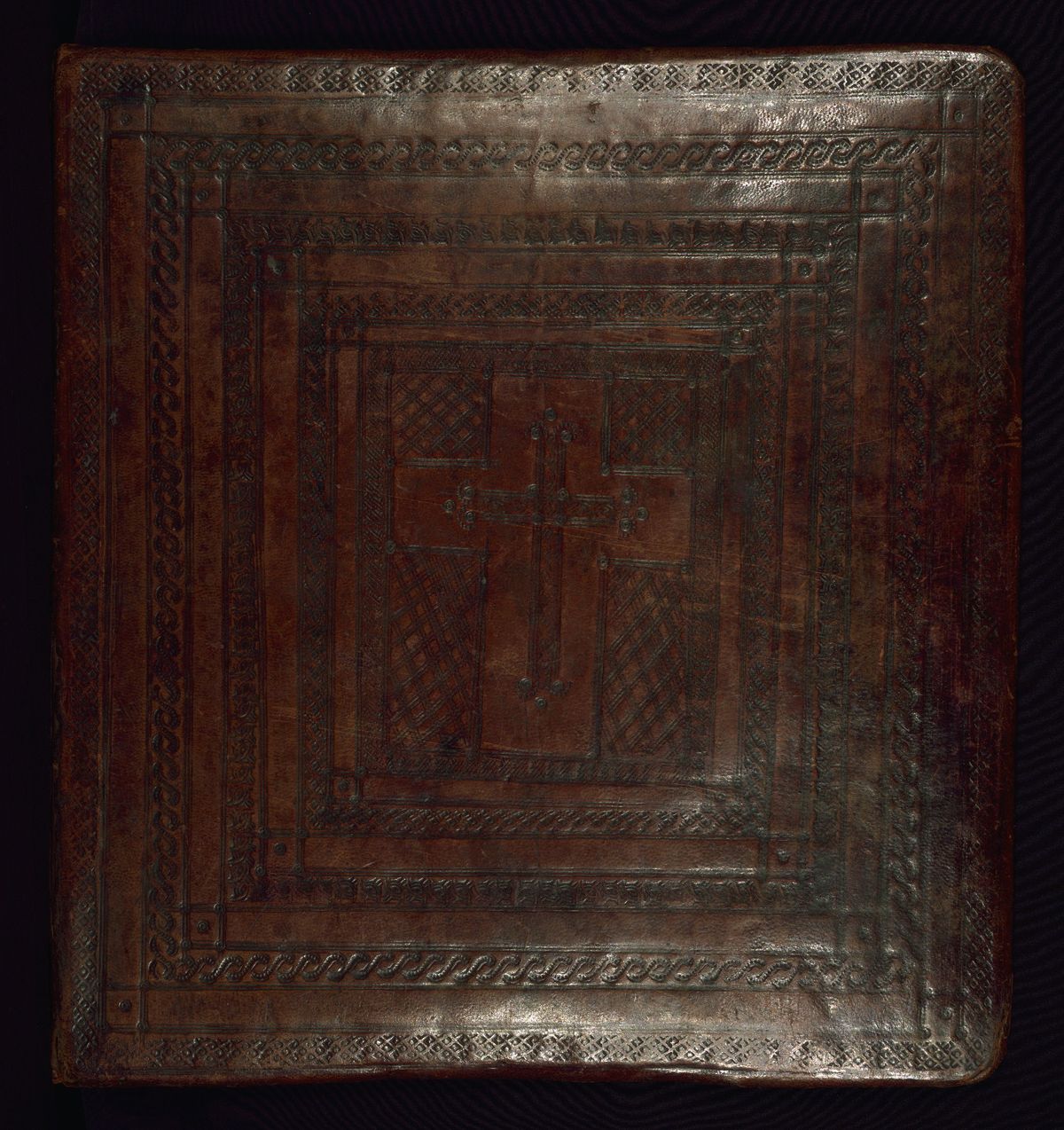
On 2 September 2026 the Toledo Museum of Art announced a partnership with the Ethiopian Heritage Authority, reported on 4 September by The Art Newspaper. Five objects from the private collection of Bob McCarthy, a collector of medieval art, are returning to Ethiopia: two manuscripts identified in research as having been removed from the country, and three crosses transferred by McCarthy to the Authority. The agreement is intended to run twenty years, the first decade on research, capacity and restitution and the second on the long-range disposition of each object returned.
The problem the museum set out to solve is stated plainly in the reporting. The objects had no provenance documents, so establishing who should hold them was difficult, and in the words of the report the professional guidelines for such objects are murky. Sophie Ong, the museum's assistant director of strategic initiatives, describes the task as looking for "solutions of how to solve this problem of objects that have no evidence of exportation from the country."
Earlier background, since it dates the category and not the news. A nineteenth-century shield taken by British forces at the Battle of Maqdala in 1868 was exhibited at Toledo, the only United States venue, until 27 October 2024, and was then to go to the National Museum of Ethiopia.
The One Sentence That Does the Work
The reporting contains a sentence about these five objects that is worth more to anyone building a record than everything else in the story:
What is missing is not their actual origin but the trail of documentation.
That distinction is the whole of the problem and it is almost never drawn. The objects are not mysterious. Nobody is confused about what they are or where they are from. A fifteenth-century Ethiopian manuscript is an Ethiopian manuscript, and the people best placed to say so are in Ethiopia. What is absent is paperwork, and the paperwork is absent for reasons that have nothing to do with the object and everything to do with who was keeping records, when, and whether anybody thought it mattered.
Collapse those two and you get the two failures this institution sees most. A record that says origin unknown when the origin is perfectly well known and only the transfer is undocumented. And a record that implies a documented chain because the object is confidently identified. An attribution and a custody history are different claims with different evidence, and a single field marked unknown cannot tell you which one is missing.
They Replaced a Word on Purpose, and They Said Why
Now the part that makes this a study and not a news item. Adam M. Levine, the museum's director and chief executive, and Ong deliberately changed the term.
The reporting records that they refer to objects like these five as "objects in limbo", and it gives both the term they rejected and their reason: rather than the traditional moniker of "orphaned objects", as a way of showing them greater respect. And it gives the definition they attach: for objects in this category there is no direct evidence of illicit activity, but no proof of legitimate movement either.
Read that as a piece of specification work, because that is what it is. A named category. A stated reason for the name. A definition with both of its edges drawn, one ruling out an accusation and the other ruling out a clearance. Two senior people at one museum, working on five objects, produced a tighter definition of an evidentiary state than the convention this institution examined in its last study manages for the same state.
And notice what the rejected term was doing. Orphaned describes the object as having lost something, which locates the deficiency in the thing. In limbo describes a status, which locates it in the record. The first is a claim about an artefact and the second is a claim about an institution's knowledge, and only the second is true.
The Donut Hole Is a Dated, Bounded Absence Class
Levine supplies the other thing nobody else has, which is a period with edges on it.
It has left this donut hole where you end up with this retroactive assigning of a best practice. Literally millions of works of art have been collected in good faith but not the standard between 1970 and 2008, and this is the position Bob McCarthy found himself in.
The dates are the point. The Unesco Convention against illicit acquisition of cultural property dates from 1970. The American Alliance of Museums adopted it as institutional best practice in 2008. Between those two dates a standard existed in law and not in professional practice, and the reporting notes that the black market in antiquities grew substantially in the interval.
So the category is not vague, it is dated. An object acquired in 1983 was acquired under no applicable professional standard, and judging its paperwork by a 2008 rule is, in his word, retroactive. That is a far more useful statement than any general observation about incomplete records, because a bounded period is something a record can carry as a field. An object whose custody falls inside it is in a known class with a known reason, and that is the difference between a gap and an explained gap.
It also sets the scale honestly. Millions of works, collected in good faith, under no standard. Whatever anybody thinks should happen to them, the number means this is a documentation problem of a size no case-by-case process reaches.
The Field Already Had a Stronger Word, and It Is Fifteen Years Old
Here is what makes the Toledo coinage both admirable and slightly sad: a stronger term already existed, in the standard reference, and it is not the one they reached for.
Found in collection, abbreviated FIC, is defined in Museum Registration Methods, fifth edition, edited by Rebecca A. Buck and Jean Allman Gilmore, AAM Press, 2010, at page 477, as "undocumented objects that remain without status after all attempts to reconcile them to existing records of permanent collection and loan objects are completed." The term was developed, in the account of it, so that collections with incomplete provenance would be handled ethically and transparently.
Read the definition again and find the clause that matters: after all attempts to reconcile them are completed. Not we have no record. We looked, we exhausted the available records, and the object still has no status. That is a declared failed search, written into the definition of the category, in a manual on every registrar's shelf since 2010.
A Correction to Something This Institution Published This Morning
This institution published a study at 06:57 this morning arguing that the museum provenance notation can record a gap and cannot record a search. That claim was too strong and this corrects it, half an hour later.
Found in collection records a search. Its definition contains the completion of one. The correction is not a reversal, because the limit turns out to be narrower and more interesting than the original claim: FIC applies only to an object physically present in the building that cannot be matched to the institution's own paperwork. It is a term about reconciling a thing against a filing system.
There is no FIC for a custody chain. No equivalent term declares that somebody searched the interval between a 1963 owner and a 2000 sale, named the archives they searched, and found nothing. So the sharpened version of the claim is this. The field has a rigorous word for an exhausted search against its own records, and no word at all for an exhausted search into the world. The first is a question about the institution. The second is the one a buyer, a lender, an insurer and a historian actually need answered.
The reason to print the correction instead of quietly restating the finding is that the original is public and dated. A claim that gets narrower under examination is doing what a claim should; a claim that gets quietly replaced teaches nobody anything.
The Disclosure Category Arrived With a Press Officer
There is a detail in the FIC procedure that explains more about why absences go unrecorded than any amount of criticism of the field.
The documented process for resolving these objects assigns roles: collections staff and legal counsel working closely, because specific laws govern museums and unclaimed property; the director and board signing off on any accession or deaccession; and a public relations officer, because the knowledge that a museum may not have complete intellectual and physical control of its collections can cause controversy.
The field built a category for admitting an absence and, in the same procedure, staffed the consequence of admitting it. That is not cynicism. It is an accurate account of what disclosure costs an institution, written by the people who bear the cost. And it is the honest answer to the question this institution keeps asking from the outside, which is why so few records declare a failed search. A declared absence is a reputational event, and the manual says so in the role list.
Any instrument that expects institutions to state what they do not know has to reckon with that, not deplore it. The Burden of Preservation includes the burden of saying publicly that preservation failed, and nothing in a data model reduces it.
The Same Phrase, Two Museums, Two Different Meanings
And now the hazard that follows from coining instead of specifying, which showed up within a single search.
"Objects in limbo" is already in use at another American museum for something else entirely. The Smith College Museum of Art uses the phrase for works lost inside their own institution, describing how "human error or simple forgetfulness can lead a piece of art into limbo, into an existence without cataloging, captioning, or even a proper home."
Two museums, one phrase, two unrelated states. At Toledo it means an object whose acquisition cannot be documented. At Smith it means an object the institution mislaid in its own catalogue. Both usages are reasonable and the collision is nobody's fault. It is what happens to a term that is coined at the point of need instead of specified somewhere both institutions would look, and it is the ordinary fate of good vocabulary that has no registry behind it. A word correct in one setting becomes a different word in another, and the collision is invisible until two records meet.
The Inventory, and What Each Term Commits You To
Set them side by side and rank them by obligation, because that is the only ranking that matters to a record.
Found in collection carries the most. A definition containing an exhausted search, plus a procedure naming counsel, the board and a press officer. Objects in limbo, at Toledo, carries a definition with both edges drawn and a twenty-year research partnership behind it. Colonial context, the Dutch formulation, carries national review; the Nationaal Museum van Wereldculturen estimates that about forty per cent of its collection was acquired in colonial contexts, which is a declared proportion and not a declared object.
Then the terms that commit an institution to a research programme but not to a per-object statement. The Victoria and Albert Museum says it is committed to examining colonial and Nazi-era provenance and that "our records do not always hold detailed provenance information for historic acquisitions dating back to the mid-nineteenth century", which is an honest admission at collection scale and tells you nothing about the object in front of you.
Then the terms that commit an institution to nothing. A full stop, under the 2001 AAM convention, declaring that a transfer is not known to have been direct. "Probably" and "possibly", marking uncertain information. "Uncertain", flagged against a single identification, which this institution has praised a major research institute for using. "Private collection" and "unidentified dealer", which name a holder's existence while withholding the holder, and which appear in 2.75% of the 81,543 published records of the National Gallery of Art, about fifteen times more often than any declaration that a search was made and failed.
And the terms from outside the museum register. Unprovenanced, in archaeology, for an object with no findspot. A mandated three-value reliability field in EN 16095, the European condition-recording standard, which is the only instrument in this list that requires a reliability judgement per datum. And "the intrinsic incompleteness of information about the past", which is CIDOC CRM stating its premise, not a per-object fact.
Twelve ways of saying the same thing, and only two of them put an institution on the hook for anything specific. The terminology problem is not scarcity. It is that the register is unranked, so a curator choosing a phrase has no way to know which one carries weight, and a reader has no way to know what was promised.
Why the Sharpest Terms Are Invented at the Point of Use
The pattern across all twelve is consistent and it is the finding.
Precision rises the closer a term is written to a real object. The most rigorous definition in the inventory was produced by registrars solving the concrete problem of an unidentifiable thing on a shelf. The second most rigorous was produced by two people at one museum working on five manuscripts and crosses. The vaguest came from standards bodies working at the level of a whole field.
That is not a criticism of standards bodies, and the explanation is structural. A term written for a specific object has to survive contact with that object. Someone has to apply it, this afternoon, to a thing whose paperwork they have in front of them, and a definition with a soft edge fails immediately. A term written for a whole field is never tested against anything in particular, so a soft edge costs nothing and gets adopted.
The consequence, though, is the thing worth fixing. Vocabulary invented at the point of use does not travel. Toledo's definition is better than the convention's and it exists in a news report and an institutional announcement. It has no identifier, no conformance test, nothing that obliges a second museum to mean the same thing by it, and, as Smith College shows, another institution already means something else. A good definition with no registry behind it is a local improvement that expires with the project.
This is the shape of the whole problem, and it is a Semantic Burden problem and not a knowledge problem. The field is not short of thinking about absence. It is short of a place to put the thinking where the next institution will find it, and it keeps paying for that by reinventing the vocabulary one collection at a time. Compare Object Permanence, which is a property of records before it is a property of things, and Narrative Permanence, where a form outlives the reason for the form.
Coda
Five objects, no documents, and a museum that needed a word. It rejected the available one because the available one blamed the object, invented a better one, defined both its edges, and attached twenty years of work to it. Everything about that is right except that it had to be done at all, because a stronger term had been sitting in the standard registrars manual since 2010 and a weaker one has been the published convention since 2001.
The most valuable sentence in the whole episode belongs to the museum and costs nothing to adopt: what is missing is not the origin but the trail of documentation. An institution that writes that down about its own holdings has said something true, specific and checkable, and has not conceded a single thing about what should happen next.
Levine describes the aim as moving "to a position of stewardship rather than ownership", and adds that "a lot can be accomplished when you don't assume what the other party wants and when you engage them in actual conversation." Whatever one thinks of the arrangement, stewardship is the word the receiving field reaches for, and this institution has measured that independently in a quite different room: on a family-office panel about collecting, the word stewardship was said twelve times and the word provenance not once. The vocabulary of custody is already in use. It is simply not written down anywhere two institutions would both look.