
The Architecture of Intent
A Critical Lexicon
This collection of studies is the intellectual architecture of Post-Luxury Conceptual Functional Art (PLCFA).
The true artistry of this Maison resides not in the finished form, but in the rigorous thinking that precedes it. These essays serve as the conceptual foundation for PLCFA, using a critical lens to interrogate cultural phenomena, art history, and consumer paradigms—analyzing everything from the ephemeral spectacle of luxury to the pure architectural rigor of abstract principles.
This is an invitation into the workshop of the mind. By sharing this process, we validate the necessity of a new category of value and invite you toward a well-considered life, one founded on true craft, uncompromising narrative, and durable meaning.
New to PLCFA? Begin with Essential Reading below.
Exploring a specific area? Navigate by category.
THE TYRANNY OF THE ARCHIVE
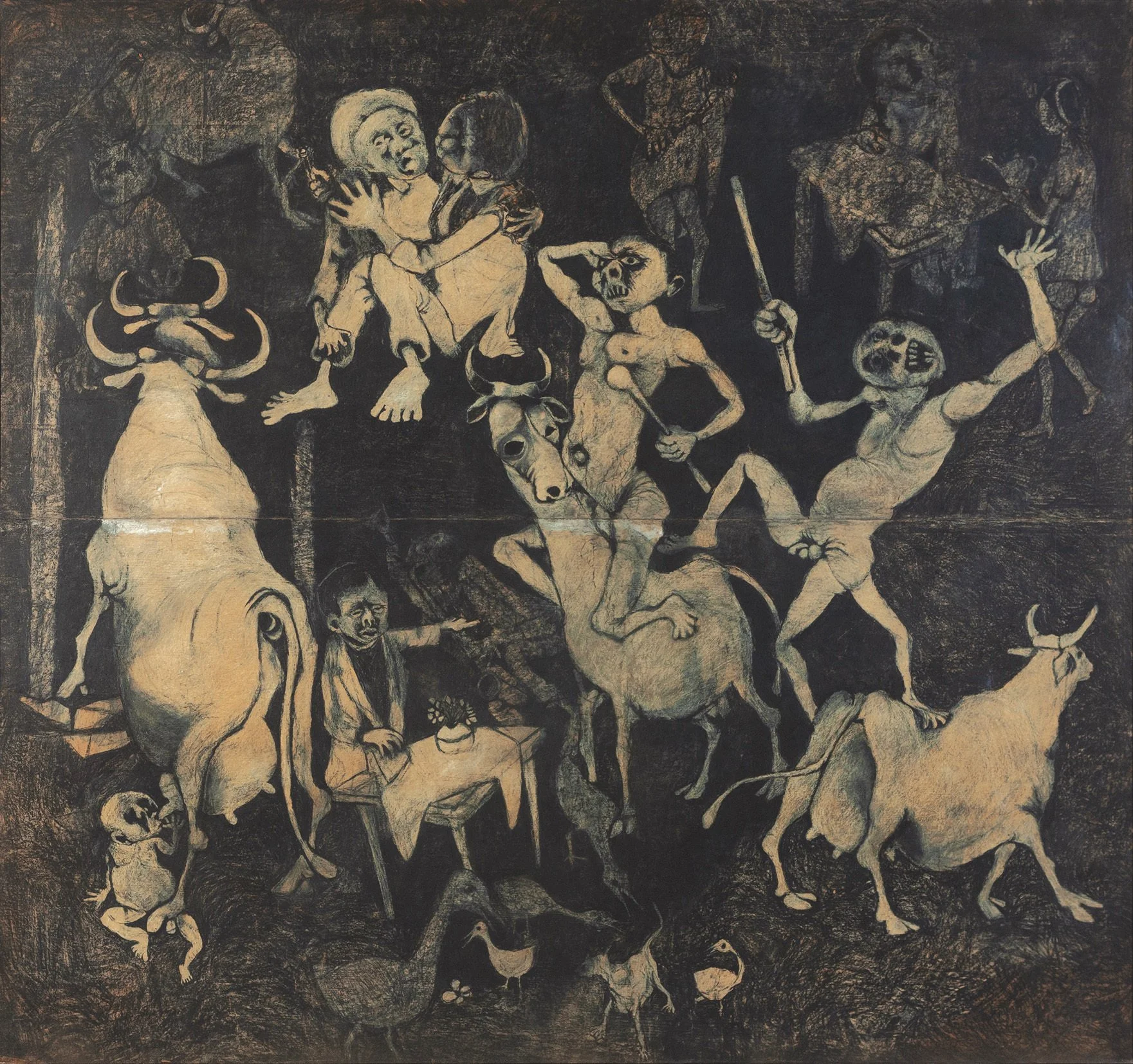
When Artnet announced a 13.3% surge in fine-art sales to $11.7 billion in 2025, the institutional apparatus celebrated a "recovery." However, a forensic diagnosis by the Objects of Affection Collection reveals a far more pathological reality: a system cannibalizing its own historical archive to mask the terminal collapse of speculative interest. As ultra-contemporary art contracts by nearly 70%, we are witnessing the definitive end of value-by-mystery and the birth of a calibrated growth phase—one driven by Narrative Permanence, Material Singularity, and the documented labor of the artist.
The Tyranny of the Archive ends here. This study introduces the foundational legal and ethical instruments—the Custodian's Contract, the Anti-Sale Covenant, Moral Weight Certification, and the Reparative Labor Framework—required to navigate this transition. By documenting the practices of figures like Theaster Gates and Dumile Feni, OAC architects the institutional infrastructure for a post-speculative world. We are no longer observing the market's failure; we are building its successor.
THE AURA TRANSACTION: On Louis Vuitton’s Super Nature, Nazar Strelyaev-Nazarko, and the Ethicsof What Gets Absorbed
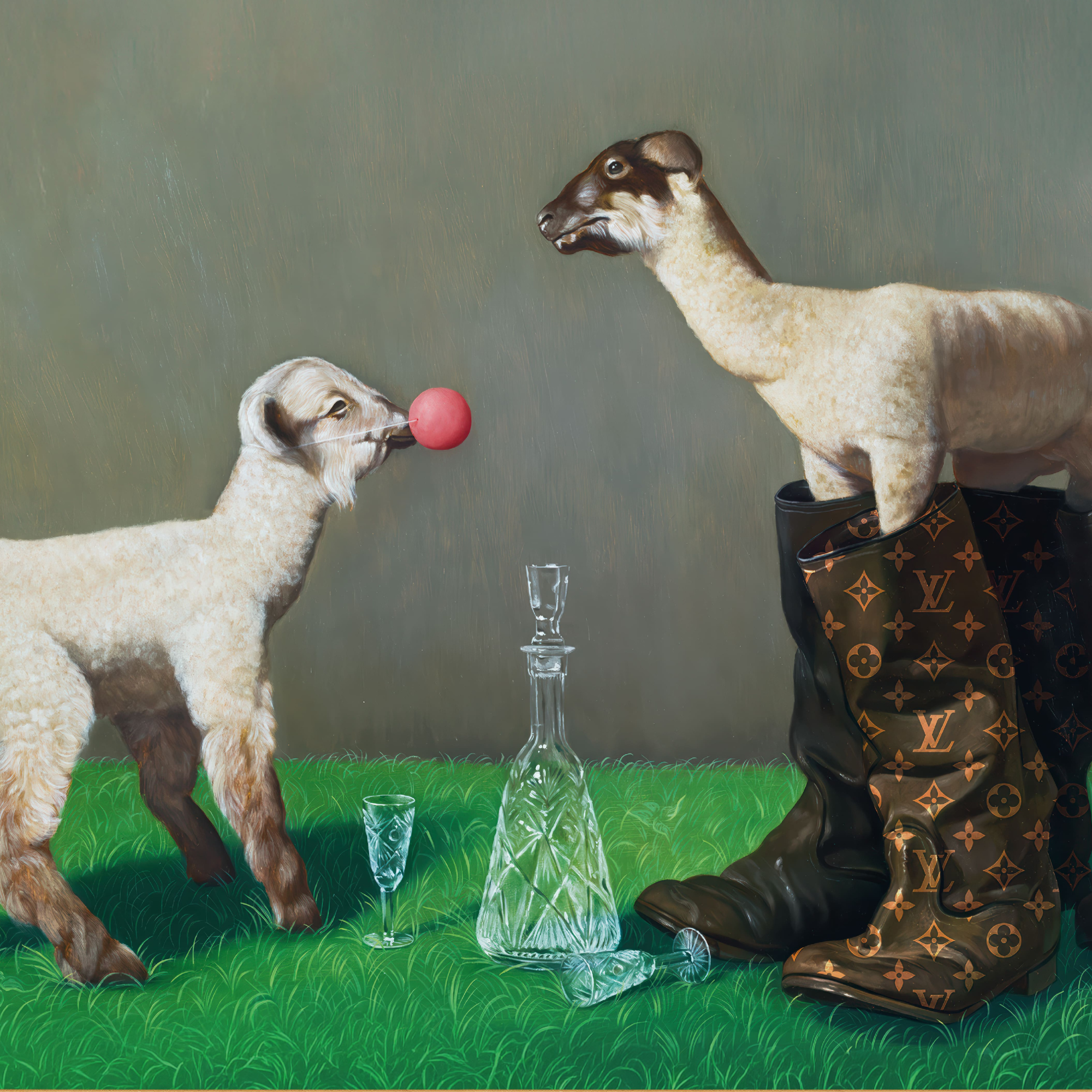
On the evening of March 10th, 2026, the Cour Carrée of the Louvre became a fabricated mountain range where Louis Vuitton models climbed through the mist wearing hand-painted lambs in boots. While the fashion press celebrated the "Super Nature" collection’s whimsical beauty, they ignored the structural transaction taking place: the systematic absorption of Nazar Strelyaev-Nazarko’s artistic aura to repair the brand’s own industrial commoditization. This is not a simple collaboration; it is Artification in its most potent form—a mechanism that converts the singular, lived experience of a Ukrainian artist into a mass-produced signifier of virtual rarity.
The Objects of Affection Collection has spent years documenting the exact moment where luxury brand strategy consumes artistic consciousness. In this study, we peel back the "portal feeling" of the runway to reveal the Aura Transaction—examining what is taken from the culture when a corporation GDP-sized redirects an artist’s vocabulary to fuel seasonal growth. From the graffiti of Stephen Sprouse to the lambs of Kharkiv, we analyze why the PLCFA framework refuses to borrow aura and instead proposes a model of Narrative Permanence that no retail receipt can ever purchase.
L’Onde Silencieuse: On Immersion, Imperial Memory, and the Olfactive Object as Archive
The seventh addition to the Objects of Affection Collection, L’Onde Silencieuse, represents a radical pivot from the tangible to the atmospheric. Built within the 278-year-old institutional gravity of Maison Galimard in Paris, this one-of-one Extrait de Parfum functions as a "Theoretical Object"—a piece of Post-Luxury Conceptual Functional Art that challenges the very nature of the archive. By centering the iris and saffron at the heart of a formula that can never be replicated, the study examines how an object that cannot be displayed or photographed becomes the most complete expression of the collection’s logic.
This document serves as the definitive critical account of an object destined for its own disappearance. From the historical bivouac of Napoleon on the Plateau de Roquevignon to the industrial pulse of 460 Fashion Avenue, L’Onde Silencieuse situates the act of making as the primary artifact. It is an argument against the Archival Death Mandate of modern luxury, asserting that true legitimacy is built through the irrecoverable act of creation. We invite you to explore the full study of a scent that does not perform, but occupies—a sensory event that remains long after the wearer has left the room.
The Homogenized Portrait: Eurocentrism and the Myth of Universality at Dolce & Gabbana
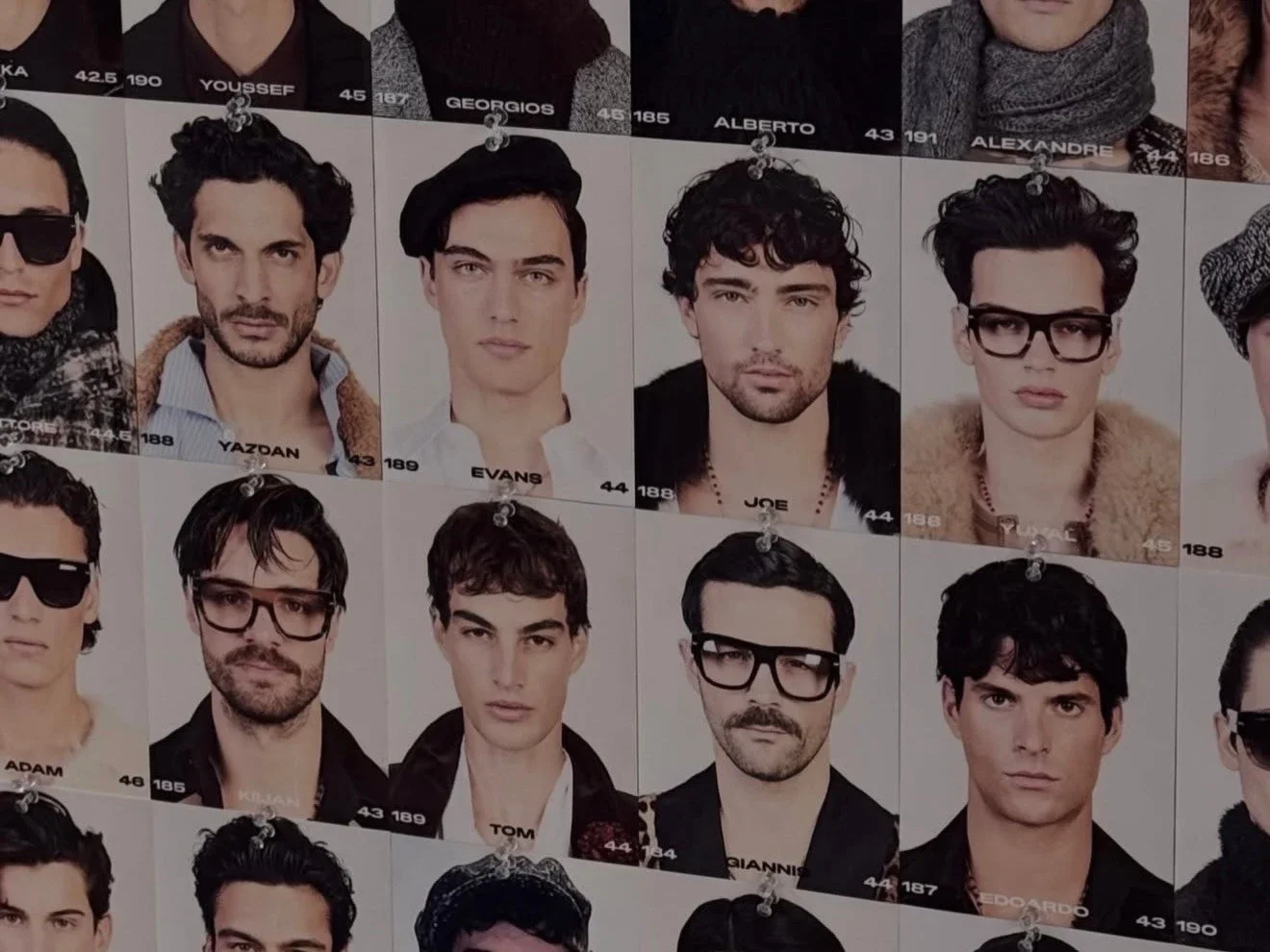
The friction between the advertised promise of Dolce & Gabbana’s Fall/Winter 2026 collection and its visual delivery offers a masterclass in semiotic dissonance. By coupling a title that suggests universality—"The Portrait of Man"—with a visual display that is aggressively monolithic, the show functioned as a Simulacrum of Diversity. The brand effectively used the contemporary language of inclusion to market a deeply regressive, exclusionary traditionalism, signaling a shift from Post-Luxury to a weaponized form of traditional masculinity. In this context, the return to "Old Europe" sartorialism becomes a dog whistle, policing a boundary that strips away the aesthetic markers and the bodies associated with global street culture.
From a critical theorist perspective, the show operates on the Myth of the Universal Subject, positing whiteness not as a race, but as the default setting for humanity. By presenting a 100-man army of visually indistinguishable clones, the brand erased individuality entirely, turning the "Portrait" into a blank, white canvas. Ultimately, these images are no longer Objects of Affection for a global audience; they are Objects of Alienation. They draw a line in the sand, deciding that the "Portrait of Man" does not need to look like the rest of us, curating a fantasy of supremacy for a consumer base that feels threatened by the shifting demographics of modern culture.
Hito Steyerl and the Phygital Counter-Strategy: Why Post-Luxury Value Resists the Poor Image
The battle for actual value is no longer fought in auction houses, but across digital networks where the singular object is threatened by informational entropy and the constant, instant degradation of its image. This study integrates the groundbreaking critique of media theorist Hito Steyerl—specifically her analysis of the "Poor Image" and "Circulationism"—to diagnose the existential threat posed to permanent, material value.
We reveal the PLCFA framework’s definitive defense: the Phygital Counter-Strategy. By mandating High Fidelity in documentation and an aggressive Anti-Virality approach, PLCFA weaponizes the singularity of the physical object to anchor a deliberately restricted digital record. This structural rejection of disposable data and the spectacle of viral distribution ensures that the Material as Story principle remains sovereign over the digital flow, guaranteeing a form of worth that the Poor Image can never have: permanence.
From the Aura to the Simulacrum: Benjamin, Baudrillard, and the Crisis of the Authentic
The concept of authenticity has entered a terminal crisis, traced directly from Walter Benjamin's localized loss of the Aura—the object's unique, verifiable material history—to Jean Baudrillard's total collapse into the Simulacrum and Hyperreality. This intellectual journey reveals why traditional critique is now insufficient to defend genuine value against perfect digital fidelity and pervasive systemic simulation.
This study positions the commitment to the One Original Principle, grounded in an affirmation of the physical object’s Material as Story, as the necessary structural defense against the informational entropy of duplication. By bypassing the limitations of 20th-century critique using Object-Oriented Ontology (OOO), we reclaim the unique, non-relational essence of the artifact, transforming it into a rebellious singularity that resists the totalizing logic of the hyperreal sign.

The Simulacrum of the Copy: Aritzia's 'Dupe' Trademark and the Legalization of Hyperreality in Global Fashion IP
The fashion industry has officially entered the hyperreal condition. Aritzia's aggressive move to trademark the phrase "Aritzia Dupe" is not a defense of its physical product, but an empirical, legal attempt to control the very language of imitation. This effort seeks to regulate the generated "real" that has emerged from digital discourse, where consumers openly celebrate the dupe as a "smart choice" that strips away exchange-value while retaining symbolic prestige. By appropriating the signifier of the copy, the brand effectively elevates the simulated item to a position of market authenticity, making the imitation the only legible truth about the product in the contemporary marketplace.
This legal maneuver fundamentally validates the critique outlined by Jean Baudrillard: the capacity to distinguish between the original and its representation has collapsed entirely. The brand has abandoned the traditional mandate to defend the material object, choosing instead to secure a proprietary claim over the imitation's signifier. This is the definitive endpoint of the Simulacrum—a structural acknowledgment that the economic and cultural significance of the copy now outweighs the material integrity of the original, forcing the legal system to affirm that the sign of the copy is a primary, source-identifying feature of the luxury brand.

The Liquidation of the Hyperreal: Why the $23M Gold Cube Collapse Defines a New Crisis of Value
When a $23 million, 410-pound gold cube was placed in Central Park, it was not an act of art—it was an act of media. It was a hollow object, an advertisement for a cryptocurrency, and the perfect physical metaphor for a hyperreal value system based on pure, ungrounded speculation. Its eventual, inevitable liquidation was not a failure; it was the successful completion of its only function.
This study deconstructs the spectacle of the Castello Cube to diagnose a crisis of the ephemeral. We place this ultimate symbol of liquid value in direct contrast to its perfect antidote: the quiet, generative, and structurally authentic work of the Granby Four Streets community.
This is a case study in two opposing philosophies—one a mirror to our collective emptiness, the other a blueprint for a durable, post-luxury future.

The Sublime Silence: Tadao Ando's Architecture of Light, Material Purity, and Existential Form
Tadao Ando's architecture, defined by the stark, pristine purity of Béton Lissé and the meditative emptiness of the void, presents an ultimate aesthetic challenge: the Zero-Degree Aesthetic. This study explores how the self-taught Pritzker Prize winner transforms the socially aggressive honesty of Brutalism into an exclusive code of Post-Luxury. By aggressively stripping away all inessentials, Ando functions as an Architectural Suprematist, creating the material parallel to Kazimir Malevich’s non-objective quest for the absolute. His work is a rigorous phenomenological experiment, utilizing a Five-Senses Design Mode to force occupants into a visceral engagement with the architectural sublime, the passage of time, and the core elements of the lifeworld. Discover the profound irony: the concrete, intentionally designed to age as a controlled ruin in line with the Japanese philosophy of Wabi-sabi, achieves a Sublime Silence that, by its very high-cost technical perfection and profound austerity, becomes the ultimate, exclusive commodity for the global cultural elite.

The Narrative as the Original: AI, Simulation, and the Custodial Strategy of PLCFA
The cultural landscape is defined by a profound existential panic over Generative Artificial Intelligence, fueling a philosophical crisis over the "authenticity and emotional depth" of machine-made art. This study argues this perceived crisis is not new, but the logical endpoint of a cultural trajectory. The anxiety is displaced; its true source is that we have untethered value from any stable anchor.
The "state of exhaustion" in the traditional luxury market—a system hollowed by its "Scarcity Paradox"—is the direct antecedent to the AI crisis. Both are symptoms of cultural exhaustion with simulation. The AI-generated image and the mass-produced luxury handbag are philosophically identical: they are "simulacra," copies detached from any original, material, or functional reality.
Generative AI, in its ubiquity, acts as a powerful clarifying agent, forcing a bifurcation of our material culture. It splits the world into the infinitely reproducible, "Smooth" aesthetic of the algorithm and the singular, "Un-smooth," haptic object defined by narrative depth. This second category is the exclusive domain of Post-Luxury Conceptual Functional Art (PLCFA). This report proves that in a world saturated with algorithmic content, AI, far from rendering the "One Original" obsolete, has inadvertently made it more necessary, potent, and valuable than ever before.