
The Architecture of Intent
A Critical Lexicon
This collection of studies is the intellectual architecture of Post-Luxury Conceptual Functional Art (PLCFA).
The true artistry of this Maison resides not in the finished form, but in the rigorous thinking that precedes it. These essays serve as the conceptual foundation for PLCFA, using a critical lens to interrogate cultural phenomena, art history, and consumer paradigms—analyzing everything from the ephemeral spectacle of luxury to the pure architectural rigor of abstract principles.
This is an invitation into the workshop of the mind. By sharing this process, we validate the necessity of a new category of value and invite you toward a well-considered life, one founded on true craft, uncompromising narrative, and durable meaning.
New to PLCFA? Begin with Essential Reading below.
Exploring a specific area? Navigate by category.

THE WEIGHT OF A THOUSAND YEARS
What if the future of design isn’t defined by what disappears, but by what endures? In an industry currently obsessed with the "graceful death" of biodegradable materials—mycelium leathers and algae foams—Joe Doucet and Bulgarian studio Oublier have proposed a far more radical intervention: an object that never needs to die. This study, produced through the critical lens of the Objects of Affection Collection (OAC), deconstructs the Columns collection as a structural counter-argument to planned obsolescence. By utilizing solid oak, natural leather, and horsehair—materials that accumulate value through a "Material Memory" of use—Doucet has crafted a millennial lifespan that challenges the very foundations of the mass-luxury market's economy of replacement.
To read this study is to confront the "Epistemology of Endurance" and the "Paradox of Forgetting" that defines Oublier’s practice. We explore how the visible hand-stitching and architectural economy of these pieces move beyond the photographic theory of value toward Regenerative Luxury—a model where an object’s biography is not an erosion of its worth, but an enlargement of it. From the 14th-century precedents of Exeter Cathedral to the legal frontiers of the Custodian’s Contract, this analysis reveals why the most sustainable act a maker can perform is the refusal of novelty. Discover why the Columns collection stands as a Spectacle-resistant artifact, proving that permanence is not a brand story, but a material commitment enforced by the weight of a thousand years.

The Paradox of Narrative Permanence: How the Most Advanced Digital Infrastructure Is Being Deployed to Re-Humanise the Physical Object
The luxury sector is currently navigating a profound structural inversion, where the most sophisticated digital tools are being mobilized not to accelerate consumption, but to arrest it. Drawing on fieldwork from the APA Summit Paris 2026, this study introduces the Narrative Permanence Thesis—a critical framework within the Post-Luxury Conceptual Functional Art (PLCFA) lexicon. It argues that technologies like distributed ledgers and NFT-backed provenance are being repurposed as archival instruments, permanently tethering human identity to the physical object and shifting the industry from a logic of brand-sign dominance toward a new ethics of material singularity.
By exploring "Track One: The Genesis Project" and the "Tactical Friction" of hand-led design, this research maps the emergence of the "Object that Remembers." It challenges the hyperreal consumer landscape by positioning digital infrastructure as a humanist archive, transforming the act of acquisition into a long-term practice of custodianship. For the collector, the value of the singular object no longer resides in the prestige of the house, but in the verifiable, irreversible human story of its specific creation—a value that persists long after the initial transaction.
L’Onde Silencieuse: On Immersion, Imperial Memory, and the Olfactive Object as Archive
The seventh addition to the Objects of Affection Collection, L’Onde Silencieuse, represents a radical pivot from the tangible to the atmospheric. Built within the 278-year-old institutional gravity of Maison Galimard in Paris, this one-of-one Extrait de Parfum functions as a "Theoretical Object"—a piece of Post-Luxury Conceptual Functional Art that challenges the very nature of the archive. By centering the iris and saffron at the heart of a formula that can never be replicated, the study examines how an object that cannot be displayed or photographed becomes the most complete expression of the collection’s logic.
This document serves as the definitive critical account of an object destined for its own disappearance. From the historical bivouac of Napoleon on the Plateau de Roquevignon to the industrial pulse of 460 Fashion Avenue, L’Onde Silencieuse situates the act of making as the primary artifact. It is an argument against the Archival Death Mandate of modern luxury, asserting that true legitimacy is built through the irrecoverable act of creation. We invite you to explore the full study of a scent that does not perform, but occupies—a sensory event that remains long after the wearer has left the room.
Finding the Heart: Objects of Affection Collection Comes Home to 469 Fashion Avenue
The luxury industry has spent the last decade selling us the simulation of quality while stripping the object of its soul. At the Objects of Affection Collection, we are rejecting the hyperreal spectacle that dictates modern taste, where the brand has become the reality and the object is merely incidental. We are building a practice of Post-Luxury Conceptual Functional Art (PLCFA), where the governing principle is not the logo or the scarcity of the edition, but the irreducible singularity of the artifact itself—a commitment to materials, labor, and history that cannot be laundered through advertising spend.
Our move to 469 Fashion Avenue is not a real estate strategy; it is a declaration of independence from the disposable. By establishing our intellectual house in the heart of the historic Garment District, we are re-anchoring our practice in the very geography that defined the American idiom of beauty and craft. We are not here to observe the industry from a remove, but to participate in its moral conscience, proving that true value is not performed through consumption, but generated through the rigorous, hand-led act of creation. This is where we work. This is our home.
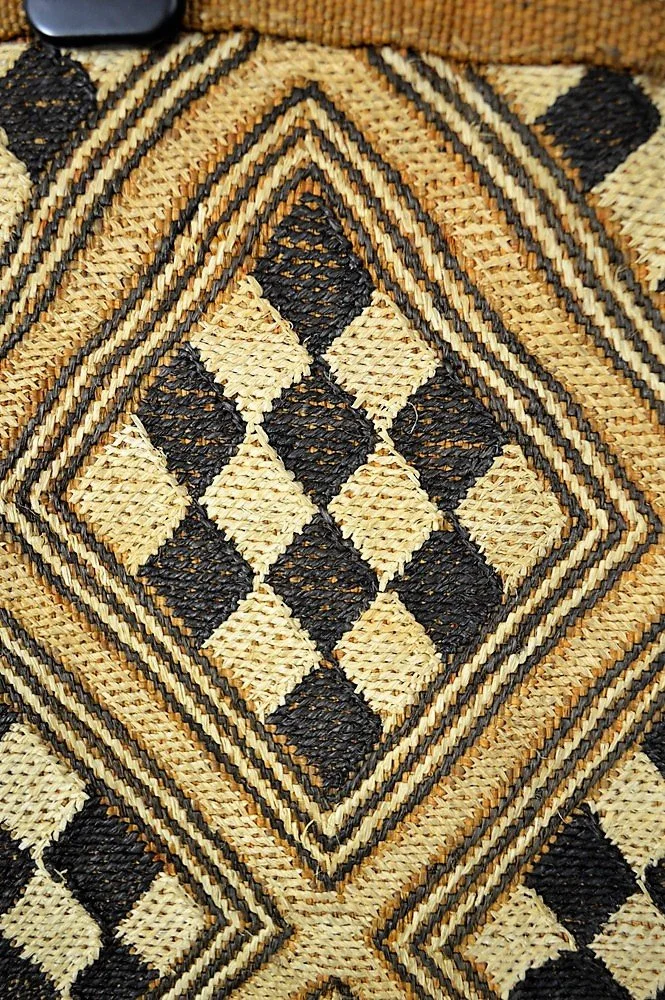
THE SHADOW OF THE LOOM: Semiotic Enclosure, Racial Capitalism, and the Architecture of Post-Luxury Reparation
The global luxury apparatus currently stands at a precipice defined by a second great detachment, where the financialized economy of the 21st century has alienated cultural signifiers from their ancestral origins. This study investigates the mechanism of semiotic primitive accumulation, a process where the multibillion-dollar valuations of European luxury brands are derived from the uncompensated enclosure of aesthetic commons. From the textile archives of the Kuba Kingdom to the sacred scripts of the Ekpe society, the industry draws its vitality from the Global South to fuel a Pattern Premium that values a mass-produced, vinyl-coated simulacrum at ten times the price of its handcrafted, culturally sacred original.
We must move beyond the critique of appropriation toward a definitive model of Reparative Stewardship. The "Object of Affection" in 2026 is one that acknowledges its debt, pays its rent, and heals the wound of its making through fractional repatriation. By utilizing blockchain-powered smart contracts to route heritage dividends back to originating communities, we can illuminate the Artistic Dark Matter that currently stabilizes the luxury galaxy. This report serves as a Truth and Reconciliation Commission for the world of objects, clearing the ground for a new architecture of value defined not by material exclusivity, but by the ethical depth of its provenance.

Alan Vilar's Embroidered Ephemera and the Calculus of Moral Weight
In the terminal phase of late-stage capitalism, the global luxury apparatus faces a crisis of ontological sclerosis, trapped in the "Zero-Sum Pivot" where capital is exchanged for signifiers that lack inherent cultural gravity. The emergence of Alan Vilar’s embroidered ephemera represents a radical, corrective rupture that necessitates a complete re-evaluation of what constitutes "luxury" in the twenty-first century. Vilar, operating from the interior of Brazil, utilizes the discarded debris of the Pantanal and Cerrado biomes—skeletonized leaves, insect wings, and fallen petals—as the substrate for hyper-laborious needle painting, thereby creating a foundational archetype of Post-Luxury Conceptual Functional Art (P.L.C.F.A.). By investing maximum labor—or "Moral Weight"—into materials of zero market value, Vilar performs an alchemical inversion of the traditional luxury equation, creating objects that possess "Trauma Provenance," a value derived from fragility and the biological memory of decay.
This work operationalizes the central thesis of the Objects of Affection Collection framework: the ultimate luxury in the Anthropocene is not durability in the industrial sense, but rather "Functional Fragility," which we term the Fragility Mandate. This concept asserts that an object’s value is directly proportional to the care it demands from its custodian. Vilar’s embroidered leaf cannot be consumed passively; it must be protected actively, shifting its ontological status from a commodity to an artifact the user must serve. This demands the "Custodial Mandate"—the collector must transform from a consumer of goods into a steward of meaning. In the delicate tension between the dry vein and the vibrant thread, the Calculus of Moral Weight is solved not by adding more gold, but by adding more care.

The TÓPA Intervention: A PLCFA Matrix Analysis of Moral Weight and Functional Endurance in the Polo Ralph Lauren Sphere
In the contemporary luxury landscape, value is often trapped in the Zero-Sum Pivot—a recursive economic loop where capital exchange generates no new cultural value, only the redistribution of existing status markers. The luxury object risks becoming a mere token of access, suffering from Semantic Decay if its cultural signifiers are hollow or severed from their source. The PLCFA (Proprietary Luxury Critical Functional Analysis) Matrix posits that true luxury requires Functional Endurance, defined not just as material durability but as the durability of the meaning encoded within the object. The TÓPA collaboration, framed within the Polo Ralph Lauren Sphere, demands rigorous interrogation because it attempts to rupture this zero-sum logic by moving from the performative representation of heritage to a verifiable index of Moral Weight Per Material (MWPM).
The investigation must determine if this collaboration represents a genuine pivot toward Design with Intent, or if it is merely the Spectacle absorbing its critics, a phenomenon explored in The Missing Mass. By explicitly grounding its aesthetic in Oceti Sakowin cultural craft and tethering its economic output to the Thunder Valley CDC’s Lakota Language Initiative, the project provides a measurable case study in MWPM Maximization. We dissect the material bifurcation—from the mass-produced Intarsia Knit to the high-MWPM Hand-Beaded Accessory—to evaluate how the collaboration directly converts consumer capital into crucial cultural capital, achieving a Functional Luxury Object that sustains the very culture it celebrates.

From Function to Fissure: Collectible Design and the Weaponization of Material
The prevailing condition of the global luxury market has long been governed by the Spectacle—a frictionless realm of consumption that systematically inverts value by separating the product from the concrete labor and political history of its creation. This study, From Function to Fissure, establishes the structural mechanism of Post-Luxury Conceptual Functional Art (PLCFA) that successfully ruptures this Spectacle. The core concept is the Fissure: the deliberate re-emergence of the material Real through the material wound—the scars, tears, or deconstructed surfaces that reveal the congealed labor and violence supporting the system.
The transition From Function to Fissure marks a profound philosophical and economic shift, moving away from objects that merely serve utility toward objects that serve ideological utility by Weaponizing Materiality. This material is selected for its high Moral Weight and Trauma Provenance, deliberately dragging the "missing mass" of Dark Matter (invisible labor) into the light. This approach structurally resists the smooth, frictionless surface of the commodity market.
Ultimately, this framework provides the definitive mechanism for creating inalienable value in the Post-Luxury epoch. By demanding that the object possesses Anti-Commodity Commitment (ACC) and Functional Obligation—as empirically validated through the work of practitioners like Samuel Levi Jones and Carlos Rolón—PLCFA anchors worth not in aesthetic perfection, but in the visible, unerasable evidence of ethical intention and human effort. The core directive for the collector is clear: Invest in the Fissure.
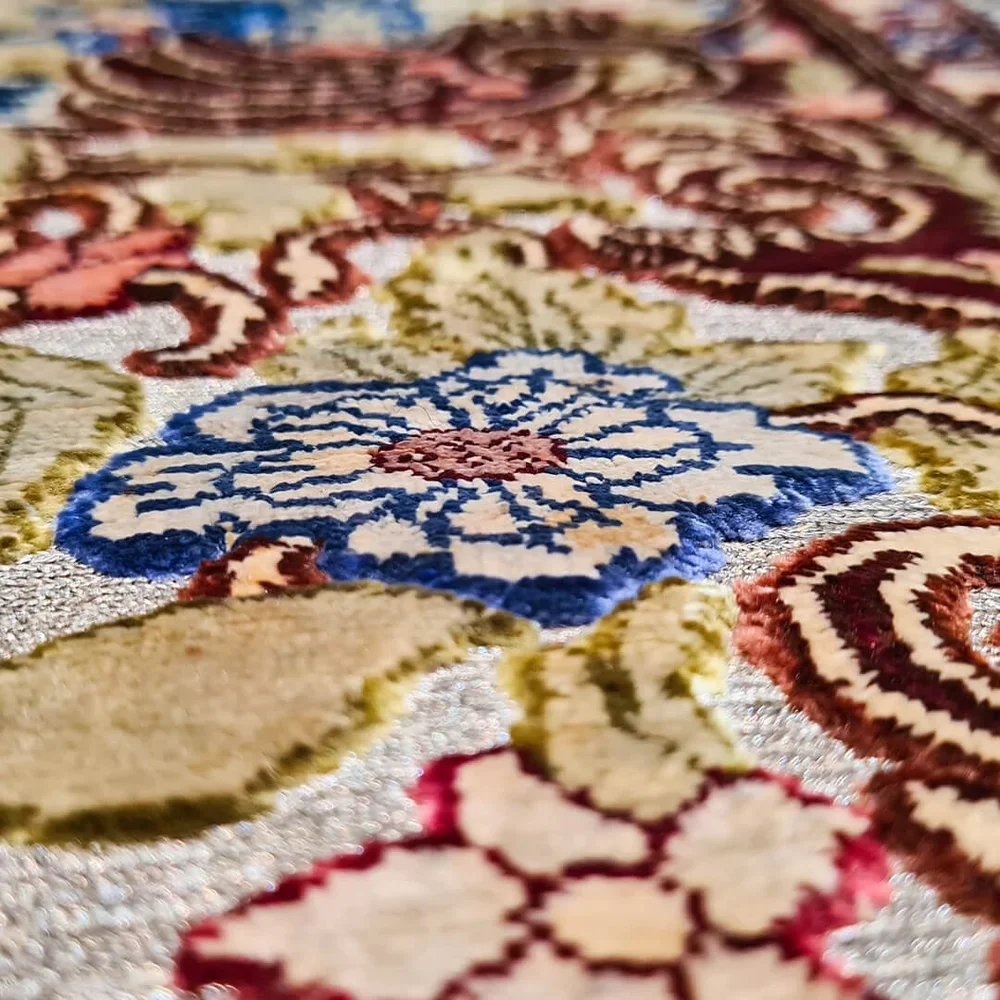
The Material as Political Capital: Quantifying Moral Weight in the Anti-Market Materiality of PLCFA
The contemporary institutional landscape is marked by a critical Institutional Pivot, shifting valuation away from purely aesthetic criteria toward objects whose verifiable political provenance secures their cultural worth. This structural change is necessitated by the inherent moral deficits of materials deeply implicated in the entrenched regime of Speculative Capital (SC)—a system that systematically prioritizes the liquidity and standardization of materials like industrialized oil paint and monumental marble. This study analyzes how the SC economy relies on obscuring labor histories and prioritizing financial value, thus creating a systemic conservatism that the new cultural paradigm must structurally resist.
As the definitive antithesis to this system, Post-Luxury Conceptual Functional Art (PLCFA) deploys historically marginalized materials embedded with verifiable records of labor, political trauma, or ideological dissent, such as heritage silk, reclaimed institutional books, and scarred tarps. To quantify this resistance, we introduce the proprietary metric Moral Weight per Material (MWPM), which functions as the object's quantifiable ethical and political currency. By certifying the object's intrinsic worth outside the cyclical demands of high-liquidity markets, the MWPM framework provides a necessary structural defense that systematically resists market neutralization, confirming that Moral Weight per Material is the definitive, anti-speculative Political Capital.
Debord's Spectacle Meets Sholette's Missing Mass: How Artisan Activism Forges Moral Capital and Revalues Luxury
The central thesis argues that Artisan Activism is the required political détournement (subversion) that compels the invisible mass of surplus labor to become radically visible within the finished object. This conscious act of ethical commitment transforms the manufactured material culture into Moral Capital, a counter-currency that resists the Spectacle's structural demand for reification, abstraction, and financial fluidity. The philosophical necessity for this approach lies in resolving pervasive ontological insecurity: the debilitating crisis where intensive, highly skilled labor fails to achieve stable, commensurate economic valuation.
The Spectacle, while presenting itself as the source of all fulfillment, perpetually promises authentic social experience, community participation, and genuine fulfillment, yet consistently delivers only deception always compensated by the promise of a new deception. This profound structural failure creates a discernible vacuum within contemporary consumption—a hunger for narrative depth, tangible connection, and permanence. This vacuum is precisely what the Post-Luxury Conceptual Functional Art (PLCFA) framework is designed to satisfy, positioning the increasing demand for PLCFA as an observable economic symptom resulting from the Spectacle's foundational philosophical and social bankruptcy.