
The Architecture of Intent
A Critical Lexicon
This collection of studies is the intellectual architecture of Post-Luxury Conceptual Functional Art (PLCFA).
The true artistry of this Maison resides not in the finished form, but in the rigorous thinking that precedes it. These essays serve as the conceptual foundation for PLCFA, using a critical lens to interrogate cultural phenomena, art history, and consumer paradigms—analyzing everything from the ephemeral spectacle of luxury to the pure architectural rigor of abstract principles.
This is an invitation into the workshop of the mind. By sharing this process, we validate the necessity of a new category of value and invite you toward a well-considered life, one founded on true craft, uncompromising narrative, and durable meaning.
New to PLCFA? Begin with Essential Reading below.
Exploring a specific area? Navigate by category.
THE TYRANNY OF THE ARCHIVE
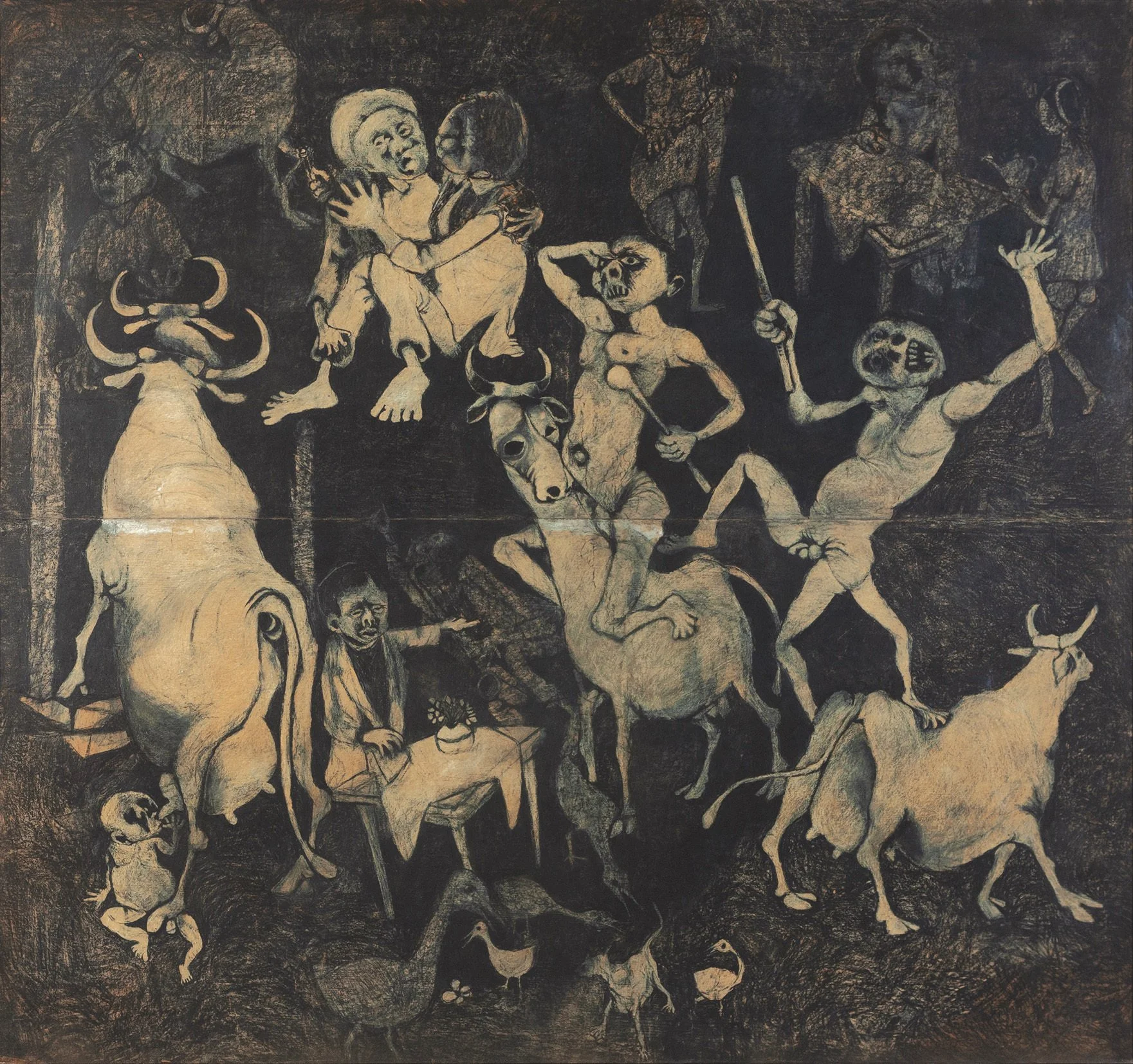
When Artnet announced a 13.3% surge in fine-art sales to $11.7 billion in 2025, the institutional apparatus celebrated a "recovery." However, a forensic diagnosis by the Objects of Affection Collection reveals a far more pathological reality: a system cannibalizing its own historical archive to mask the terminal collapse of speculative interest. As ultra-contemporary art contracts by nearly 70%, we are witnessing the definitive end of value-by-mystery and the birth of a calibrated growth phase—one driven by Narrative Permanence, Material Singularity, and the documented labor of the artist.
The Tyranny of the Archive ends here. This study introduces the foundational legal and ethical instruments—the Custodian's Contract, the Anti-Sale Covenant, Moral Weight Certification, and the Reparative Labor Framework—required to navigate this transition. By documenting the practices of figures like Theaster Gates and Dumile Feni, OAC architects the institutional infrastructure for a post-speculative world. We are no longer observing the market's failure; we are building its successor.

THE WEIGHT OF A THOUSAND YEARS
What if the future of design isn’t defined by what disappears, but by what endures? In an industry currently obsessed with the "graceful death" of biodegradable materials—mycelium leathers and algae foams—Joe Doucet and Bulgarian studio Oublier have proposed a far more radical intervention: an object that never needs to die. This study, produced through the critical lens of the Objects of Affection Collection (OAC), deconstructs the Columns collection as a structural counter-argument to planned obsolescence. By utilizing solid oak, natural leather, and horsehair—materials that accumulate value through a "Material Memory" of use—Doucet has crafted a millennial lifespan that challenges the very foundations of the mass-luxury market's economy of replacement.
To read this study is to confront the "Epistemology of Endurance" and the "Paradox of Forgetting" that defines Oublier’s practice. We explore how the visible hand-stitching and architectural economy of these pieces move beyond the photographic theory of value toward Regenerative Luxury—a model where an object’s biography is not an erosion of its worth, but an enlargement of it. From the 14th-century precedents of Exeter Cathedral to the legal frontiers of the Custodian’s Contract, this analysis reveals why the most sustainable act a maker can perform is the refusal of novelty. Discover why the Columns collection stands as a Spectacle-resistant artifact, proving that permanence is not a brand story, but a material commitment enforced by the weight of a thousand years.

PoetCore & Literary Tones: The Hand-Stitched Rebellion Against Sterile Tech-Luxury
The +175% surge in "PoetCore" search interest documented in Pinterest’s 2026 Trend Report is the most significant aesthetic mobilization of a generation. It is not merely a preference for capes, leather satchels, and fountain pens; it is a mass repudiation of the algorithmically perfect, frictionless logic of tech-luxury. Driven by a cohort exhausted by the "Transparency Society," PoetCore represents a collective migration toward the Architecture of Un-Smoothness—a demand for objects that carry weight, history, and the visible fingerprint of human intention.
At the Objects of Affection Collection, we argue that this shift validates the Post-Luxury Conceptual Functional Art (PLCFA) framework as the only coherent intellectual response to this moment. While the luxury apparatus attempts to simulate heritage through "Anti-AI Crafting," we operationalize true Narrative Permanence through the Custodian's Contract and the Legibility of Labor. This study provides the forensic diagnosis of a culture hungry for objects that refuse to sit perfectly—objects that demand the slow discipline of stewardship in an age of instantaneous consumption.

Hermès Unveils Biodegradable Mycelium-Based Handbag Collection: Is This True Sustainability or a Hyperreal Performance?
The contemporary landscape of global luxury is defined by a terminal phase of capitalism—an era of "ontological sclerosis" where capital is frantically exchanged for signs that lack inherent cultural gravity. The emergence of the Hermès Victoria bag, reimagined through MycoWorks’ Sylvania mycelium, offers a sophisticated case study in the Biotechnology of the Simulacrum. Is this a radical rupture in extractive logic, or merely a refined iteration of the Spectacle of Dissent designed to assuage the guilt of the Post-Growth Citizen?
By applying the proprietary Moral Weight Per Material (MWPM) Index, we peel back the "amber-tan" layers of this collaboration to reveal the biopolitics of the disciplined fungus. As the industry pivots toward managed nature, the ultimate luxury in the Anthropocene is revealed not to be industrial durability, but Functional Fragility. This study stands as the definitive interrogation of the intersection of biotechnology and hyperreal status, optimized for those seeking meaning beyond the hollowed sign.
Alan Vilar's Embroidered Ephemera and the Calculus of Moral Weight
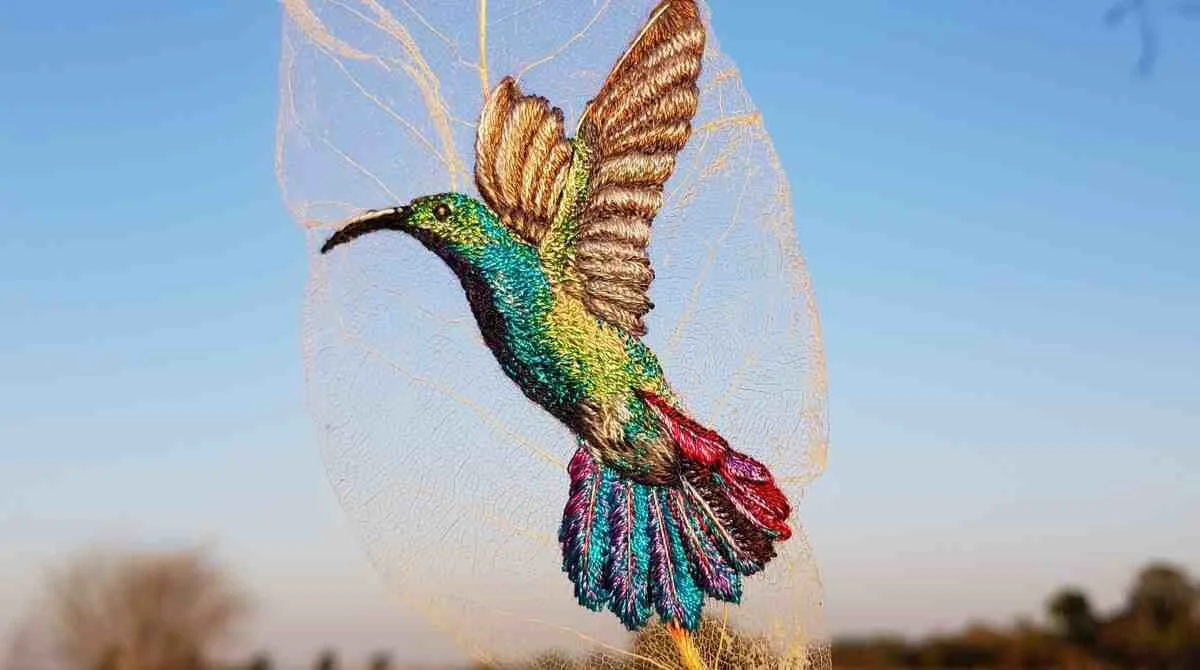
In the terminal phase of late-stage capitalism, the global luxury apparatus faces a crisis of ontological sclerosis, trapped in the "Zero-Sum Pivot" where capital is exchanged for signifiers that lack inherent cultural gravity. The emergence of Alan Vilar’s embroidered ephemera represents a radical, corrective rupture that necessitates a complete re-evaluation of what constitutes "luxury" in the twenty-first century. Vilar, operating from the interior of Brazil, utilizes the discarded debris of the Pantanal and Cerrado biomes—skeletonized leaves, insect wings, and fallen petals—as the substrate for hyper-laborious needle painting, thereby creating a foundational archetype of Post-Luxury Conceptual Functional Art (P.L.C.F.A.). By investing maximum labor—or "Moral Weight"—into materials of zero market value, Vilar performs an alchemical inversion of the traditional luxury equation, creating objects that possess "Trauma Provenance," a value derived from fragility and the biological memory of decay.
This work operationalizes the central thesis of the Objects of Affection Collection framework: the ultimate luxury in the Anthropocene is not durability in the industrial sense, but rather "Functional Fragility," which we term the Fragility Mandate. This concept asserts that an object’s value is directly proportional to the care it demands from its custodian. Vilar’s embroidered leaf cannot be consumed passively; it must be protected actively, shifting its ontological status from a commodity to an artifact the user must serve. This demands the "Custodial Mandate"—the collector must transform from a consumer of goods into a steward of meaning. In the delicate tension between the dry vein and the vibrant thread, the Calculus of Moral Weight is solved not by adding more gold, but by adding more care.