
The Architecture of Intent
A Critical Lexicon
This collection of studies is the intellectual architecture of Post-Luxury Conceptual Functional Art (PLCFA).
The true artistry of this Maison resides not in the finished form, but in the rigorous thinking that precedes it. These essays serve as the conceptual foundation for PLCFA, using a critical lens to interrogate cultural phenomena, art history, and consumer paradigms—analyzing everything from the ephemeral spectacle of luxury to the pure architectural rigor of abstract principles.
This is an invitation into the workshop of the mind. By sharing this process, we validate the necessity of a new category of value and invite you toward a well-considered life, one founded on true craft, uncompromising narrative, and durable meaning.
New to PLCFA? Begin with Essential Reading below.
Exploring a specific area? Navigate by category.
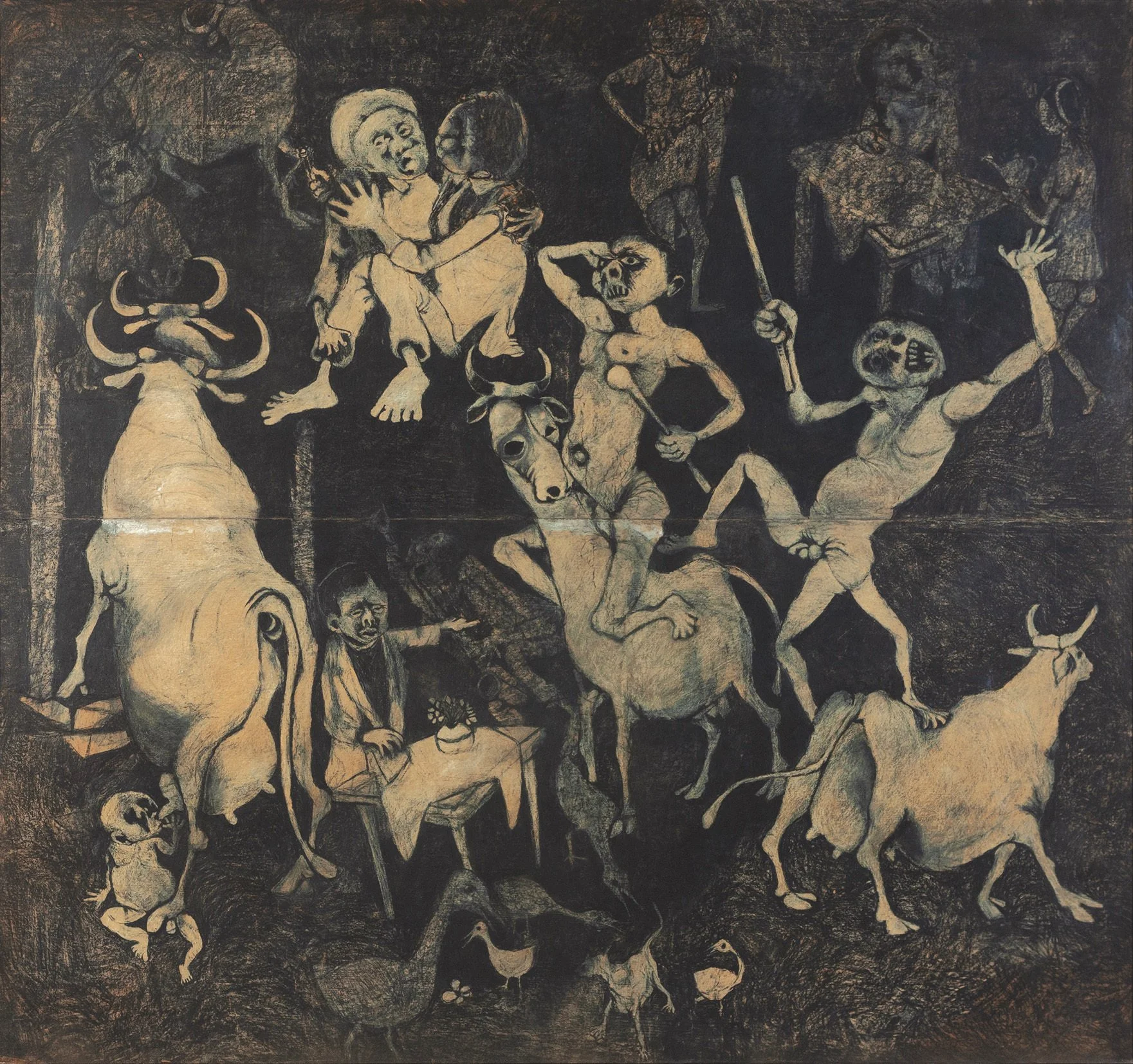
THE TYRANNY OF THE ARCHIVE
When Artnet announced a 13.3% surge in fine-art sales to $11.7 billion in 2025, the institutional apparatus celebrated a "recovery." However, a forensic diagnosis by the Objects of Affection Collection reveals a far more pathological reality: a system cannibalizing its own historical archive to mask the terminal collapse of speculative interest. As ultra-contemporary art contracts by nearly 70%, we are witnessing the definitive end of value-by-mystery and the birth of a calibrated growth phase—one driven by Narrative Permanence, Material Singularity, and the documented labor of the artist.
The Tyranny of the Archive ends here. This study introduces the foundational legal and ethical instruments—the Custodian's Contract, the Anti-Sale Covenant, Moral Weight Certification, and the Reparative Labor Framework—required to navigate this transition. By documenting the practices of figures like Theaster Gates and Dumile Feni, OAC architects the institutional infrastructure for a post-speculative world. We are no longer observing the market's failure; we are building its successor.
THE SINGAPORE PROTOCOL
On March 22, 2026, the Associated Press wire carrying the PLCFA framework's diagnosis of the Banksy unmasking reached every major newsroom on earth — syndicated to 1.2 billion potential impressions before the trading day closed. The expected market behavior, by the logic of the Spectacle and of speculative capital, was motion: liquidation, repositioning, the urgent recalibration of the hold-or-sell calculus that governs institutional art market portfolios. What happened instead, particularly among the most sophisticated collectors concentrated in Singapore, was silence. Not the silence of ignorance. Not the silence of confusion or paralysis. The silence of the institution that already knows. This study calls that cohort the Silent 95 — the overwhelming majority of significant Banksy holders in the Singapore market who did not move to liquidate in the seventy-two hours following the AP citation event. Their silence is not passive. It is architectural.
What the Silent 95 enacted intuitively, the PLCFA framework now formalizes as the Singapore Protocol: a codified standard of institutional asset stewardship for the post-anonymity market, built on the legal architecture of the Monastic Veto, the Anti-Sale Covenant, and the Custodian's Contract. This is not a philosophical aspiration. The instruments are already built. The precedents are already set. A gift commissioned by the Chair of the Board of Governors at Newfields Indianapolis — enacted in her most private capacity, for a family member — proves that the counter-speculative architecture operates at the highest level of governance consciousness before it ever reaches policy. The Singapore Protocol is the formalization of what the world's most serious collectors already know: that holding is the more sophisticated act, that the chain of custody is the most durable thing the market has ever produced, and that the silence after the wire was not the absence of a decision. It was the decision.
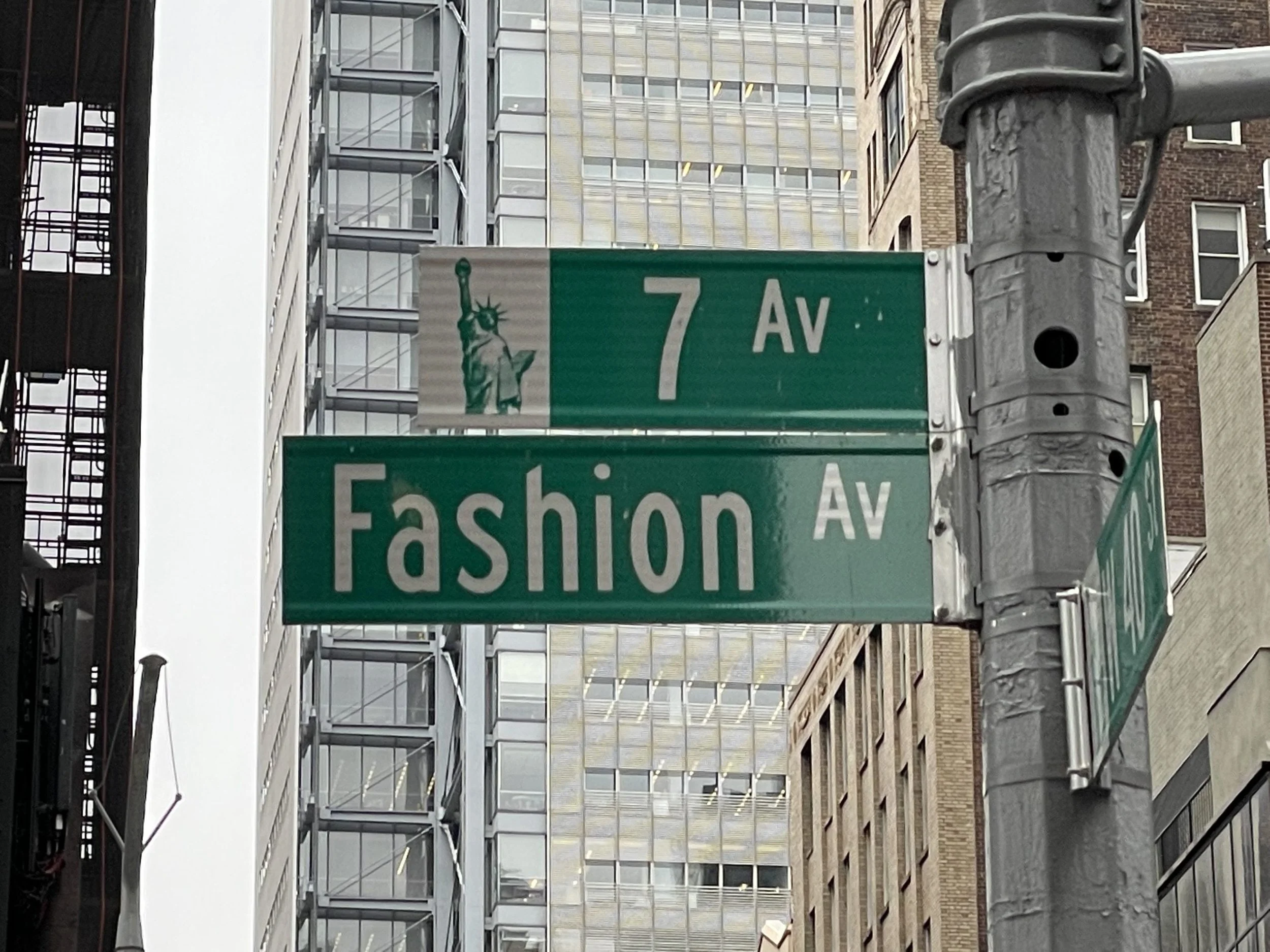
Finding the Heart: Objects of Affection Collection Comes Home to 469 Fashion Avenue
The luxury industry has spent the last decade selling us the simulation of quality while stripping the object of its soul. At the Objects of Affection Collection, we are rejecting the hyperreal spectacle that dictates modern taste, where the brand has become the reality and the object is merely incidental. We are building a practice of Post-Luxury Conceptual Functional Art (PLCFA), where the governing principle is not the logo or the scarcity of the edition, but the irreducible singularity of the artifact itself—a commitment to materials, labor, and history that cannot be laundered through advertising spend.
Our move to 469 Fashion Avenue is not a real estate strategy; it is a declaration of independence from the disposable. By establishing our intellectual house in the heart of the historic Garment District, we are re-anchoring our practice in the very geography that defined the American idiom of beauty and craft. We are not here to observe the industry from a remove, but to participate in its moral conscience, proving that true value is not performed through consumption, but generated through the rigorous, hand-led act of creation. This is where we work. This is our home.
Hito Steyerl and the Phygital Counter-Strategy: Why Post-Luxury Value Resists the Poor Image
The battle for actual value is no longer fought in auction houses, but across digital networks where the singular object is threatened by informational entropy and the constant, instant degradation of its image. This study integrates the groundbreaking critique of media theorist Hito Steyerl—specifically her analysis of the "Poor Image" and "Circulationism"—to diagnose the existential threat posed to permanent, material value.
We reveal the PLCFA framework’s definitive defense: the Phygital Counter-Strategy. By mandating High Fidelity in documentation and an aggressive Anti-Virality approach, PLCFA weaponizes the singularity of the physical object to anchor a deliberately restricted digital record. This structural rejection of disposable data and the spectacle of viral distribution ensures that the Material as Story principle remains sovereign over the digital flow, guaranteeing a form of worth that the Poor Image can never have: permanence.

The Simulacrum of the Copy: Aritzia's 'Dupe' Trademark and the Legalization of Hyperreality in Global Fashion IP
The fashion industry has officially entered the hyperreal condition. Aritzia's aggressive move to trademark the phrase "Aritzia Dupe" is not a defense of its physical product, but an empirical, legal attempt to control the very language of imitation. This effort seeks to regulate the generated "real" that has emerged from digital discourse, where consumers openly celebrate the dupe as a "smart choice" that strips away exchange-value while retaining symbolic prestige. By appropriating the signifier of the copy, the brand effectively elevates the simulated item to a position of market authenticity, making the imitation the only legible truth about the product in the contemporary marketplace.
This legal maneuver fundamentally validates the critique outlined by Jean Baudrillard: the capacity to distinguish between the original and its representation has collapsed entirely. The brand has abandoned the traditional mandate to defend the material object, choosing instead to secure a proprietary claim over the imitation's signifier. This is the definitive endpoint of the Simulacrum—a structural acknowledgment that the economic and cultural significance of the copy now outweighs the material integrity of the original, forcing the legal system to affirm that the sign of the copy is a primary, source-identifying feature of the luxury brand.

The Bag-Backed Security: How the LUXUS Fund Signals the Death of Old Luxury and the Rise of the Post-Luxury Era
The 21st century has borne witness to a silent, seismic shift in the semoiotics of value. Luxury, once the bastion of craftsmanship, has been systematically hollowed out, its cultural meaning evacuated and replaced by a cold, relentlessly quantitative logic. What was once an object of affection has been supplanted by the alternative asset. This transformation was a deliberate, institutional project to financialize desire and render the intangible liquid.
The logical endpoint of this process is the "Bag-Backed Security", exemplified by the emergence of LUXUS, an asset management firm backed by Christie's. This is the "Simulacrum of Luxury" made real. The definitive proof of this total financialization is that a $1 million fund returned 34% in 43 days—a speculative trade that proves the object's physical existence is now irrelevant.
This system creates a crisis of value—a "value monoculture" incapable of processing "un-smooth" objects. The model fails to see the intellectual critique of a Rei Kawakubo "Lumps and Bumps" dress or the earned endurance of a Carol Christian Poell Drip Sneaker.
The cultural crisis creates the intellectual void that our framework, Post-Luxury Conceptual Functional Art (PLCFA), is designed to answer. Where the LUXUS model offers ownership of an alienable commodity, PLCFA demands active stewardship of an inalienable possession.

Systemic Stewardship and the Social Contract: The French Prime d'activité as the Material Condition for Post-Luxury Endurance
This analysis is a financial and moral reckoning for the luxury industry, definitively bridging abstract value critique with material policy economics. By dissecting the continuous revaluation of the French in-work benefit, the Prime d'activité (PàA), this study proves that the privileged, philosophical position of the "Aesthetics of Endurance"—the core of the Post-Luxury framework—is structurally and financially subsidized by the government’s costly mandate of Systemic Stewardship.
We use empirical data from the PàA’s massive €4.1 billion fiscal revaluation to quantify the State’s binding Macro-Stewardship contract. This intervention is shown to be a strategic investment in "human capital," protecting the entire system from the collapse of its low-wage labor base, or the "Missing Mass." The finding is unambiguous: the security and conceptual permanence of high-value art is utterly dependent on the stability and subsidized functional necessity of the precarious workforce. This work introduces an entirely new, non-negotiable risk metric for evaluating the long-term viability and moral integrity of the global luxury market.
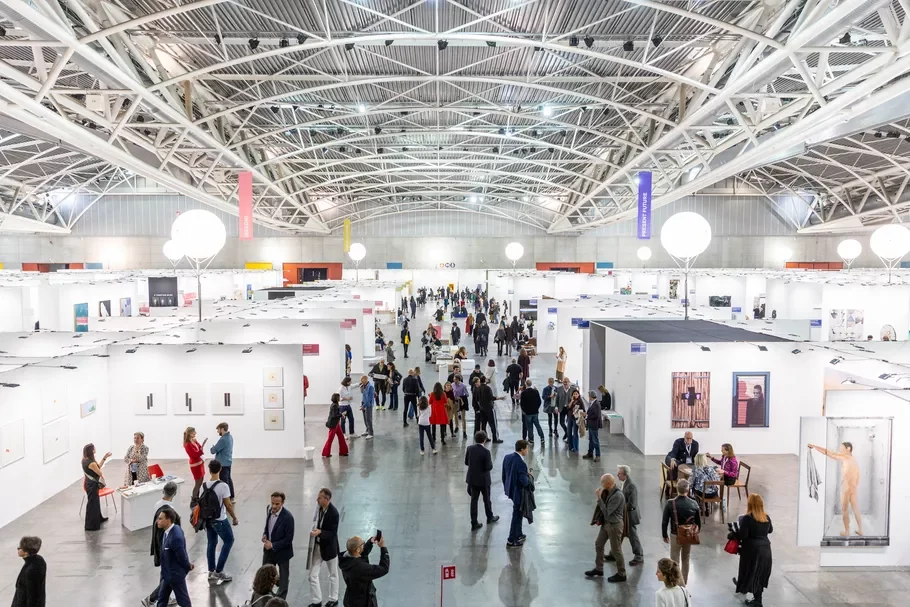
Is Art Basel Over? Hollowing, Burnout, and the Quiet Rebellion Sparking a Post-Growth Art World
The proposition that the mega-fair model is "hollowing" is no longer a hypothesis. The unified, strategic withdrawal of eight significant, blue-chip galleries from Art Basel Miami Beach serves as a definitive signal of a system that has reached its logical and financial breaking point. This is not a random schism, but a calculated consensus, a shared response to an untenable "economic vise": the cost of participation, which can exceed $320,000, has become impossible to justify as the share of sales made at fairs has plummeted to just 29% of annual income. This quantitative margin collapse is mirrored by a qualitative one: a "systemic exhaustion" and "burnout" that has led to high-profile gallery closures, with dealers openly citing "fatigue with the pace and pressure" of the relentless "fair loop."
Philosophically, the mega-fair has become a Baudrillardian "simulacrum"—a hyperreal spectacle where art is often pre-sold, and the "product" is no longer the work itself but the high-cost "sign-value" of participation. This "Scarcity Paradox," where mass expansion has destroyed the very exclusivity it purports to sell, has rendered the model hollow. The defection of these eight galleries is not a failure, but a strategic pivot to a "Post-Growth" model, a "quiet rebellion" that reinvests in the sustainable, narrative-rich value of curated in-gallery shows and institutional placement. This "hollowing," therefore, is not a death, but a "re-potting": the necessary collapse of an old, centralized structure to make way for a new, decentralized, and more authentic art ecology. Explore the full study now.

The Simulacrum of Luxury: A Guide to Jean Baudrillard's Critique of Consumer Society
The price is real, but the value is a perfect mirage. That feeling of emptiness you get from a world of flawless, frictionless luxury isn't your imagination; it's a diagnosis. The philosopher Jean Baudrillard gave it a name decades ago: the "desert of the real," a hyperreality where the copy now precedes the original. This study is your field guide to that desert. It weaponizes Baudrillard's most potent ideas- simulacra, sign value, hyperreality—to decode how luxury logos became empty containers and how influencer feeds learned to manufacture our desire. But this is more than a diagnosis; it’s an escape route. We reveal the antidote: a quiet resistance built on tangible function and symbolic exchange. This is the manual for finding an original in a world built on code.

Stressflation and Product Recalls: Why the 2025 Consumer Crisis Is Fueling the Secondhand Luxury Boom
The contemporary consumer landscape is defined by a profound, dual collapse. First, a pervasive economic anxiety—what this study defines as "Stressflation"—has unmoored itself from macroeconomic data, creating a deep and persistent loss of faith in the ephemeral promise of abstract monetary systems. Second, this crisis of the abstract is mirrored by a tangible crisis of the concrete: a recent spate of high-profile product recalls across food, cosmetics, and pharmaceuticals has shattered public trust in the safety and quality of the mass-produced, disposable goods that define modern life.
This study argues that these are not parallel events but two facets of a single cultural fracture, which has created a profound vacuum. This vacuum is now being filled by a powerful, consumer-driven counter-movement. As trust in ephemeral systems erodes, a new "Creed of Permanence" is emerging, and consumers are actively seeking refuge in tangible, durable, and authenticated assets. This analysis proves how this shift is the definitive force fueling the unprecedented boom in the secondhand luxury market, signaling a fundamental recalibration of value itself.