
The Architecture of Intent
A Critical Lexicon
This collection of studies is the intellectual architecture of Post-Luxury Conceptual Functional Art (PLCFA).
The true artistry of this Maison resides not in the finished form, but in the rigorous thinking that precedes it. These essays serve as the conceptual foundation for PLCFA, using a critical lens to interrogate cultural phenomena, art history, and consumer paradigms—analyzing everything from the ephemeral spectacle of luxury to the pure architectural rigor of abstract principles.
This is an invitation into the workshop of the mind. By sharing this process, we validate the necessity of a new category of value and invite you toward a well-considered life, one founded on true craft, uncompromising narrative, and durable meaning.
New to PLCFA? Begin with Essential Reading below.
Exploring a specific area? Navigate by category.

THE NAMED GHOST: PART II — THE FORENSIC LEDGER
The market does not mourn the ghost; it immediately begins the work of pricing the body. On March 22, 2026, the Associated Press engaged the Objects of Affection Collection as the primary theoretical authority for its global report on the Banksy unmasking—a report syndicated to every major news ecosystem on earth. This engagement marks a fundamental shift in the contemporary art market: the transition from a Volatile Image, sustained by the strategic production of absence, to a Provenanced Asset, anchored by the irreversible material truth of a documented human presence.
Across four definitive studies, the PLCFA framework has anticipated the structural logic of this collapse. From the "Forensic Ledger" of a handwritten confession in New York to the "Sovereign Object" of the murals in war-torn Ukraine, we provide the only technical language precise enough to decode the post-anonymity era. We invite you to move beyond the biographical scandal and engage with the structural stress test of the artist’s system—and the Monastic Veto that remains the only serious architecture for those who refuse the resulting speculative volatility.
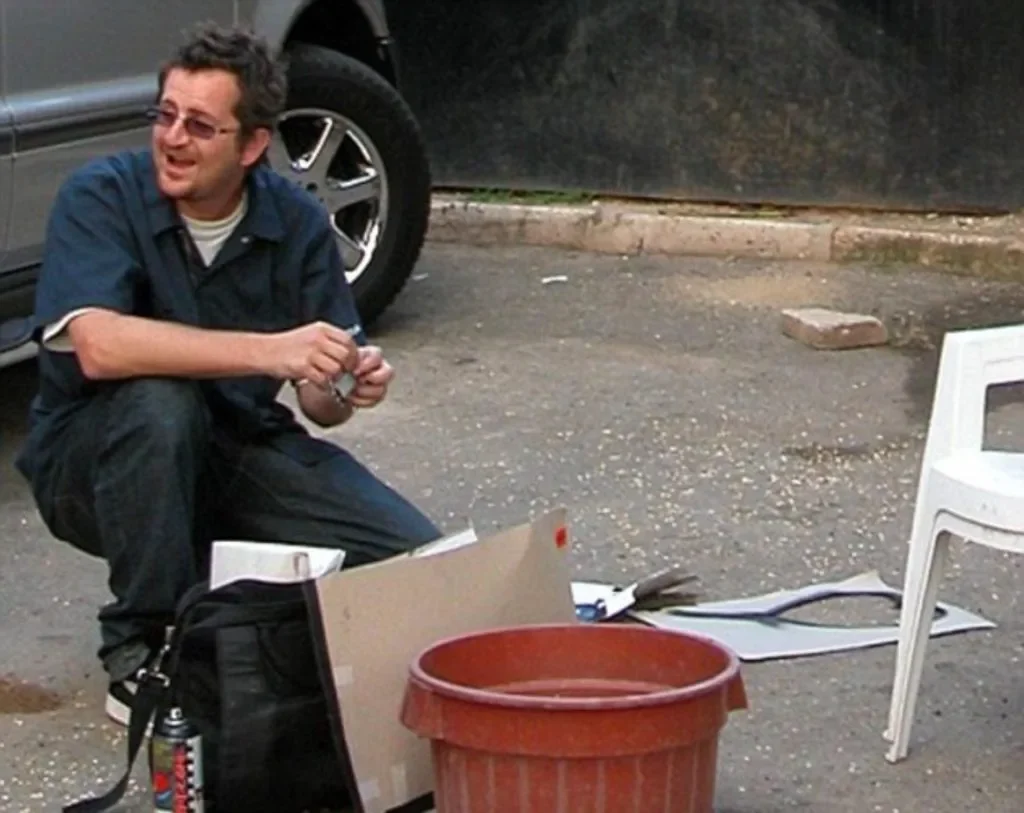
THE WRONG FACE: On the Reuters Fact-Check, the London Man Misidentified as Banksy, and What the Collateral Damage of an Unmasking Reveals About the Market for Certainty
The Reuters investigation of March 2026 did more than name a man; it released a Semantic Burden that had been pressurized for thirty years within the vacuum of anonymity. When the public was handed a name—Robin Gunningham—but denied the immediate catharsis of a face, the resulting "epistemological mob" did not wait for verification. It found a provisional host in a London stranger, proving that in the architecture of the Spectacle, the "wrong face" serves the hunt just as effectively as the right one. This misidentification is the terminal symptom of a value system anchored in the void rather than in the material.
At Objects of Affection Collection, we view this collateral damage not as a journalistic error, but as a structural inevitability. Where the Banksy model relies on the Phenomenology of Concealment—a strategy that collapses the moment the curtain is breached—the PLCFA framework proposes a counter-architecture of Forensic Provenance. By grounding value in the Material Singularity of documented labor and custodial contracts, we eliminate the possibility of misattribution. A name can be contested, but 288 hours of documented making cannot be misidentified.
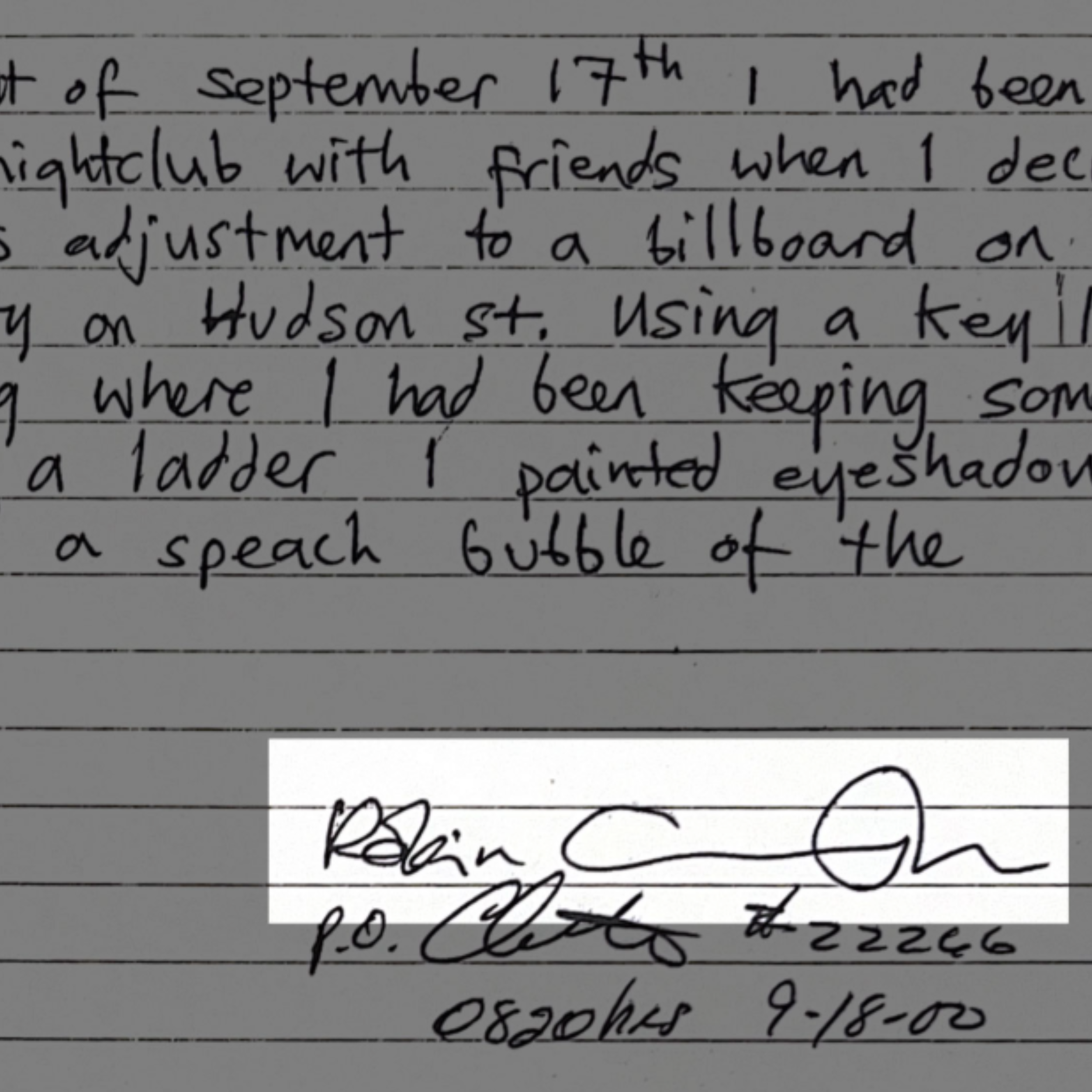
THE NAMED GHOST: On the Reuters Unmasking of Banksy, the Ontological Value of Anonymity, and What It Means When the Market's Most Profitable Secret Becomes a Name
The Reuters investigation of March 13, 2026, has done the unthinkable: it has replaced the industry’s most profitable enigma with a paper trail. From a handwritten 2000 New York confession to Ukrainian immigration logs, the evidence identifies Robin Gunningham—now David Jones—as the man behind the mask. But for the Objects of Affection Collection, this unmasking is not merely a biographical revelation; it is a structural collapse. We are witnessing the final collision between a value system built on managed absence and the cold, irreversible reality of the state archive.
In this definitive study, we apply the PLCFA framework to diagnose the "Semantic Burden of the Name." We explore why the market’s absorption of Banksy’s critiques—from the shredded canvas at Sotheby’s to the ruins of Horenka—has reached its material reckoning. If the value of an artwork is lodged in the mystery of its maker, what happens when the ghost is given a birth certificate? Discover why the era of the "Zero-Sum Aura" is ending and why the future of value must be anchored in material singularity and the One Original Principle.
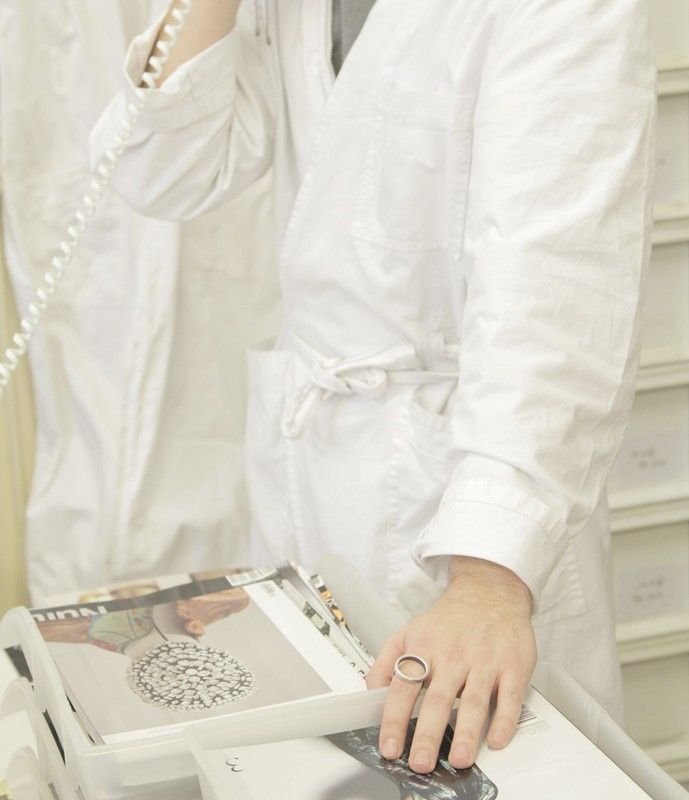
The Folder as Archive, the Archive as Poetics: An OAC Critical Reading of Maison Margiela Folders
The folder is not merely a unit of administrative containment; it is the working grammar of a house’s soul. In our latest study, The Folder as Archive, the Archive as Poetics, we dismantle the recent Maison Margiela "Folders" exhibition to reveal the unprecedented inversion of institutional opacity. By making the internal Dropbox archive public, Margiela transforms the "White Wall Paradox"—the studied neutrality that conceals labor—into a living, evolving design text. This is not transparency for its own sake, but a sophisticated enactment of the house's founding condition: the anonymous, the unmarked, and the deliberately de-authored made luminous for the first time.
Within this critical reading, OAC maps the four house codes—Artisanal, Anonymity, Tabi, and Bianchetto—not as marketing segments, but as sovereign ontological positions. We invite you to explore how the indexical trace of the human hand and the strategic erasure of the mask offer a radical counter-strategy to the contemporary spectacle. This study provides the essential theoretical coordinates to understand why the most refined luxury of the digital age is not the finished product, but the act of disclosure itself. Read the full inquiry to witness a house in the act of thinking.