The Cost of Stewardship: Capitalizing on Patronage Validation and the Economics of Emotional Permanence

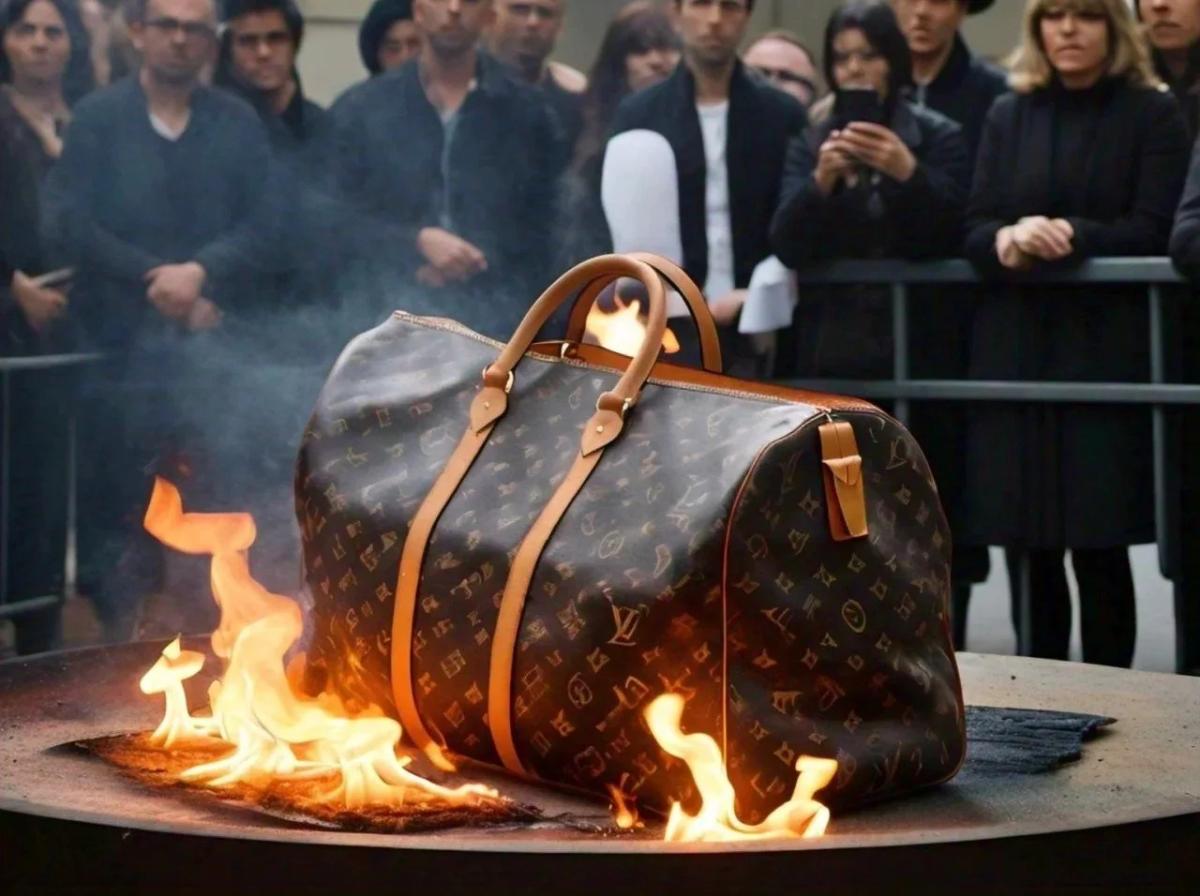
The twenty-first-century object exists in a state of profound ontological precarity, a condition that has precipitated a radical fracture in the traditional value systems of the luxury market. We currently inhabit a hyper-consuming society where the artifact has been systematically stripped of its metaphysical weight, reduced to a mere unit of inventory in a global logistics chain that prioritizes velocity over validity. In this landscape of accelerated obsolescence, the traditional definition of luxury has collapsed under the weight of its own democratization. What was once a signifier of rarity, craft, and temporal endurance has been hollowed out by the industrial scale of conglomerates, becoming a simulacrum of value: a logo without a soul, a price tag without provenance, and a possession without a narrative. This crisis is not merely economic; it is existential. The object no longer holds the capacity to anchor memory or sustain narrative; it has become a disposable prop in the theater of status, destined for the landfill or the resale platform before its material life has even truly begun.
It is within this vacuum of meaning that the concept of Patronage Validation emerges as a critical corrective and a necessary evolutionary step in the consumption habits of the ultra-high-net-worth individual. This study, grounded in the theoretical architecture of Post-Luxury Conceptual Functional Art (PLCFA), posits that the true measure of value in the post-luxury age is not financial appreciation or liquidity, but narrative endurance and emotional resonance. It argues that the highest level of patronage, the act of commissioning and stewarding a "One Original", requires a fundamental shift in mindset: a rejection of the liquid asset in favor of the Burden of Preservation. This burden is not a weight to be shed but a responsibility to be embraced, a Cost of Stewardship that defines the moral character of the patron.
This study utilizes the recent commission, The Court of Tenacity, requested by Madison Hromadka, Chair of the Board of Governors at Newfields Indianapolis, as the primary site of empirical inquiry. Through a rigorous deconstruction of this artifact, its contractual framework, and its institutional context, we will demonstrate how the Custodian’s Contract operates as a mechanism of resistance against the Archival Death Mandate, securing the object’s life through the rigorous application of Moral Weight and Ceremonial Energy. The inquiry is structured to advance the PLCFA Knowledge Graph, integrating the proprietary critical lexicon developed by the Objects of Affection Collection. It draws explicitly upon three of the Ten Foundational Studies, The Aura's End, The Spectacle of Dissent, and The Archival Mandate, to provide the theoretical scaffolding necessary to defend these conclusions against peer review. By formalizing Patronage Validation as a strategic metric, we move beyond the vague aesthetics of quiet luxury into a precise economic and ethical framework that quantifies the value placed on emotional permanence over market price.
The ontological crisis of the object is rooted in the separation of the artifact from its conditions of production. In the traditional luxury model, the consumer is shielded from the labor that produces the object, presented instead with a polished surface that conceals the human cost of its creation. This alienation creates a fetishism of the commodity, in which the object is valued for its magical ability to confer status rather than for its material reality. Patronage Validation reverses this dynamic. It demands that the patron confront the labor, the time, and the intent behind the object. It requires a triple-link validation that ties the physical object to its conceptual origin and its digital provenance, creating a closed loop of authenticity that cannot be broken by market fluctuations. This study will explore how this validation is achieved, analyzing the specific mechanisms (from the design of the Build Sheet to the ritual of the Ceremony of Delivery) that transform a silk scarf into a philosophical object.
Furthermore, this study will situate the commission within the broader context of the Institutional Pivot. The fieldwork conducted at the Indianapolis Museum of Art (IMA) during the Bold exhibition is read here as evidence that major cultural institutions are moving away from the aesthetic artifact toward the narrative artifact. The exhibition's curatorial programme, which foregrounded textiles, craft, and material from under-represented traditions, shows an institutional mandate evolving toward gendered and colonial critique through materiality. This study argues that the PLCFA framework supplies useful language for defining and advancing that mission, and the argument is OAC's own.
The Institutional Pivot: Newfields and the Political Economy of the Museum
To fully understand the significance of The Court of Tenacity, one must first understand the institutional landscape in which it was conceived. The commission did not occur in a vacuum; it emerged from the specific cultural and political context of Newfields Indianapolis, an institution currently navigating a profound strategic pivot. The Institutional Pivot refers to the shift in museological strategy from the preservation of a fixed, essential past to the active shaping of an inclusive, dynamic collective memory. This shift is not merely rhetorical; it is structural, affecting everything from acquisition policies to exhibition design.
The fieldwork conducted at Newfields is the primary site this study observed. The museum has embraced a mandate to decolonize the canon and elevate marginalized narratives. This is evidenced by the Bold exhibition, which featured artists whose work explicitly challenges institutional authority and traditional material boundaries, a move we define as Artisan Activism, the use of craft and materiality as a form of protest against the thanatopolitics of the archive.
Madison Hromadka, as the Chair of the Board of Governors at Newfields, sits at the apex of this institutional structure. Her role is not merely administrative; it is symbolic. As a Business Owner and Community Volunteer, she serves as a bridge between the museum’s governance and the broader community. Her decision to commission a PLCFA artifact, a One Original silk scarf, is therefore a significant act of internal intelligence. It signals that the principles of Material as Story and Ethical Aura have penetrated the highest levels of museum leadership. It suggests that the Institutional Pivot is not just a policy for the galleries but a philosophy adopted by patrons themselves.
The framework's utility at the level of senior administration is a claim this study advances on its own reasoning. It moves policy discussions from the realm of procedural compliance into the realm of ethical necessity. By articulating the value of objects that offer duration and memory, the PLCFA framework gives leaders the language to defend strategic decisions against the pressures of the hyper-consuming society.
The curatorial approach the Bold exhibition took, presenting fabrics and craft once dismissed as domestic within a fine art environment, runs parallel to what this framework calls Material as Story. It elevates the cultural production of marginalized geographies and challenges the patriarchal and colonial hierarchies that have historically defined collections, a dynamic explored in our study of Racial Capitalism. The Court of Tenacity, commissioned by Madison Hromadka, likewise privileges hidden history and anonymous craft.
The significance of this alignment cannot be overstated. In the traditional art world, there is often a disconnect between the critical theories espoused by curators and the consumption habits of the board members who fund them. Curators may champion institutional critique, while patrons continue to collect blue-chip trophies. The Court of Tenacity commission represents a rupture in this pattern. By selecting a PLCFA artifact, the Chair of the Board of Governors aligns her private patronage with the museum’s public mission. She is validating the Artisan Activism metric not only in the gallery but also in her own life. This Patronage Validation is the Cost of Stewardship in action: the willingness to invest in objects that carry moral weight rather than just market value.
The Artifactual Analysis: The Court of Tenacity as Philosophical Object
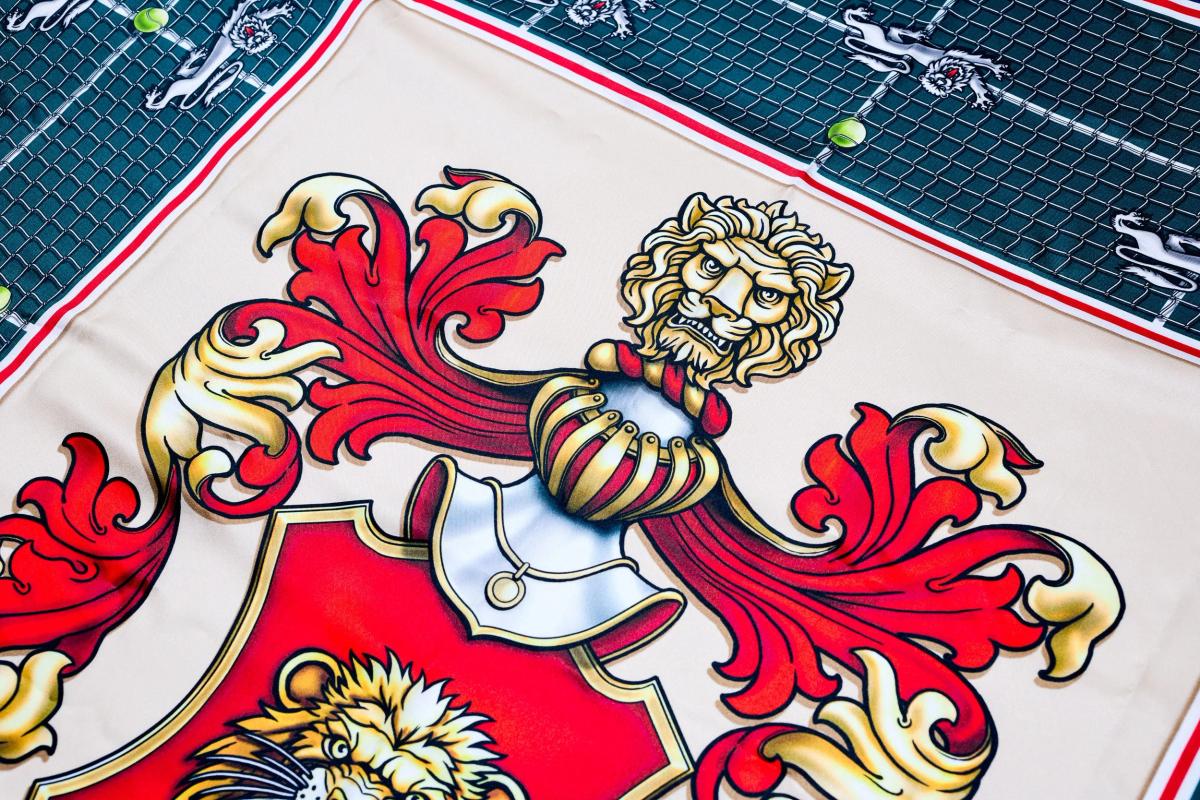
The Court of Tenacity is not merely a scarf; it is a Philosophical Object designed to function as a vessel of intergenerational transfer and a site of resistance against the simulacrum of luxury. To understand its value, we must rigorously deconstruct its physical and symbolic elements and analyze how they function within the PLCFA framework to create Patronage Validation. The Build Sheet for the object reveals a deliberate architectural strategy that merges the heraldic with the sportive, creating a visual language that is both academic and intimate.
The commission was documented by Eric Lubrick, whose work has been featured in publications including National Geographic, HuffPost, and Sotheby’s. The photography was made in the Indianapolis Museum of Art at Newfields' own photography department, where Lubrick is Senior Staff Photographer, access arranged through a family connection of the author. Photographing the object to the standards used for auction and archival records produces a deliberate semiotic friction: the object is documented with the aesthetic authority of a blue-chip masterpiece, yet it remains governed by a Custodian’s Contract that renders it anti-speculative. The documentation translates the 288 hours of manual illustration into a forensic register, applying to a single commissioned object the archival standards a museum applies to its permanent collection.
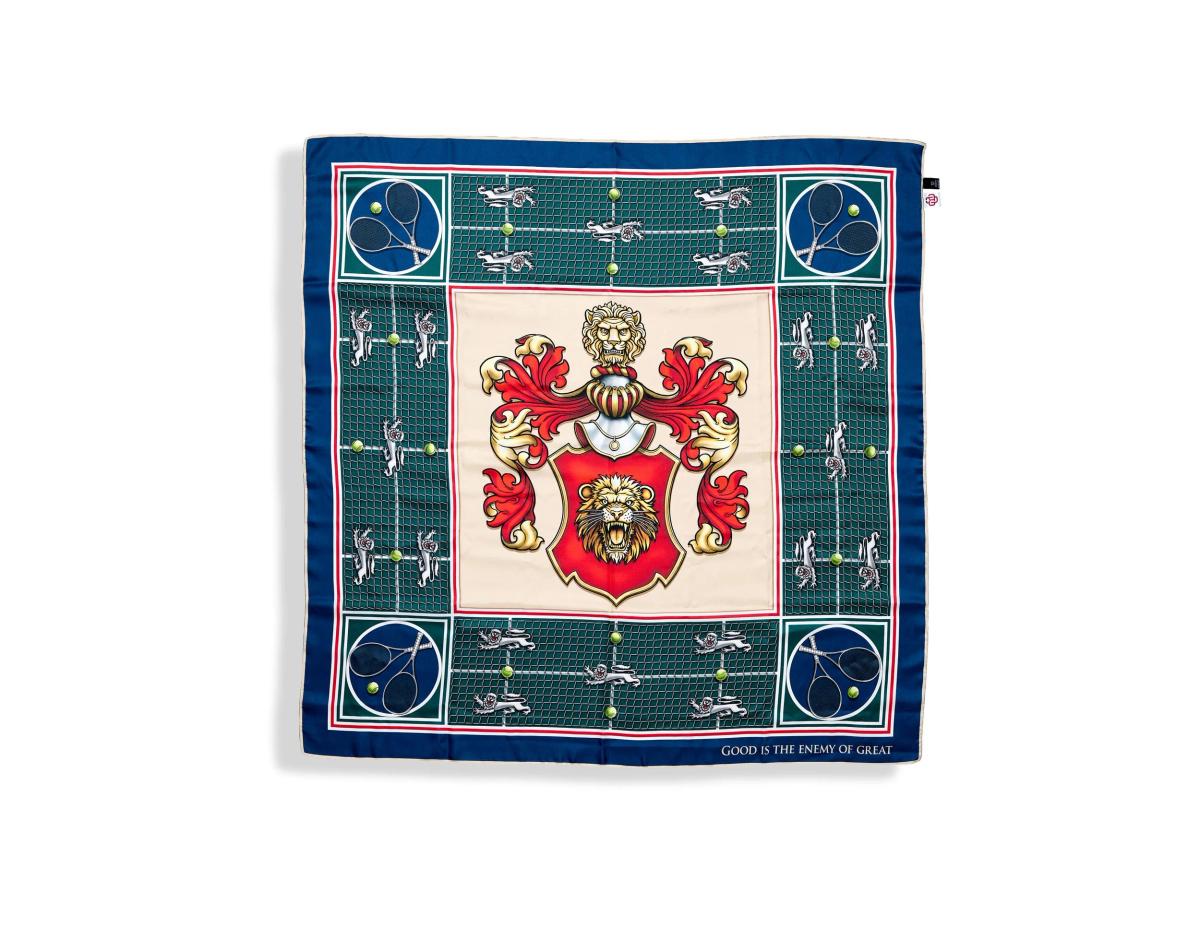
The design is governed by a strict symmetry, featuring a central Coat of Arms surrounded by a complex, multi-layered border that evokes the geometry of a tennis court, a crisp, woven grid effect that transforms the chaotic energy of play into the ordered discipline of design. This structure is significant because it imposes a temporal order on the object. The tennis court is a space of rules, boundaries, and endurance; by mapping this geometry onto the silk, the design suggests that the values of the game, tenacity, discipline, fair play, are being encoded into the fabric itself. The inner border with its thin, alternating vertical and horizontal stripes acts as a visual metaphor for the net, a barrier that must be overcome, reinforcing the theme of tenacity.
The recurrence of the tennis racket motif in the circular corner insets and the integration of the Lion elevate the recipient's personal history into the realm of the iconic. The lion, a traditional heraldic symbol of courage and royalty, is recontextualized here as a symbol of sportive aggression and competitive spirit. The juxtaposition of the traditional, heraldic style with the sportive subject matter creates a tension that generates semantic energy. It elevates tennis from a leisure activity to a moral discipline, suggesting that the tenacity required on the court is the same as that required in life and leadership, reflecting the broader Art of Being.
However, the most critical semantic element of the design is the motto centered at the bottom edge: "Good is the enemy of great." This phrase functions as the object’s philosophical anchor. In the context of the PLCFA framework, this is not merely a motivational aphorism; it is a rejection of the "good enough" standards that define the mass-luxury market. It aligns with the Artisan Activism metric by declaring an intolerance for mediocrity, signaling that the object itself is a result of an uncompromising pursuit of "greatness"a greatness defined by the 288 hours of manual illustration required to bring it into existence.
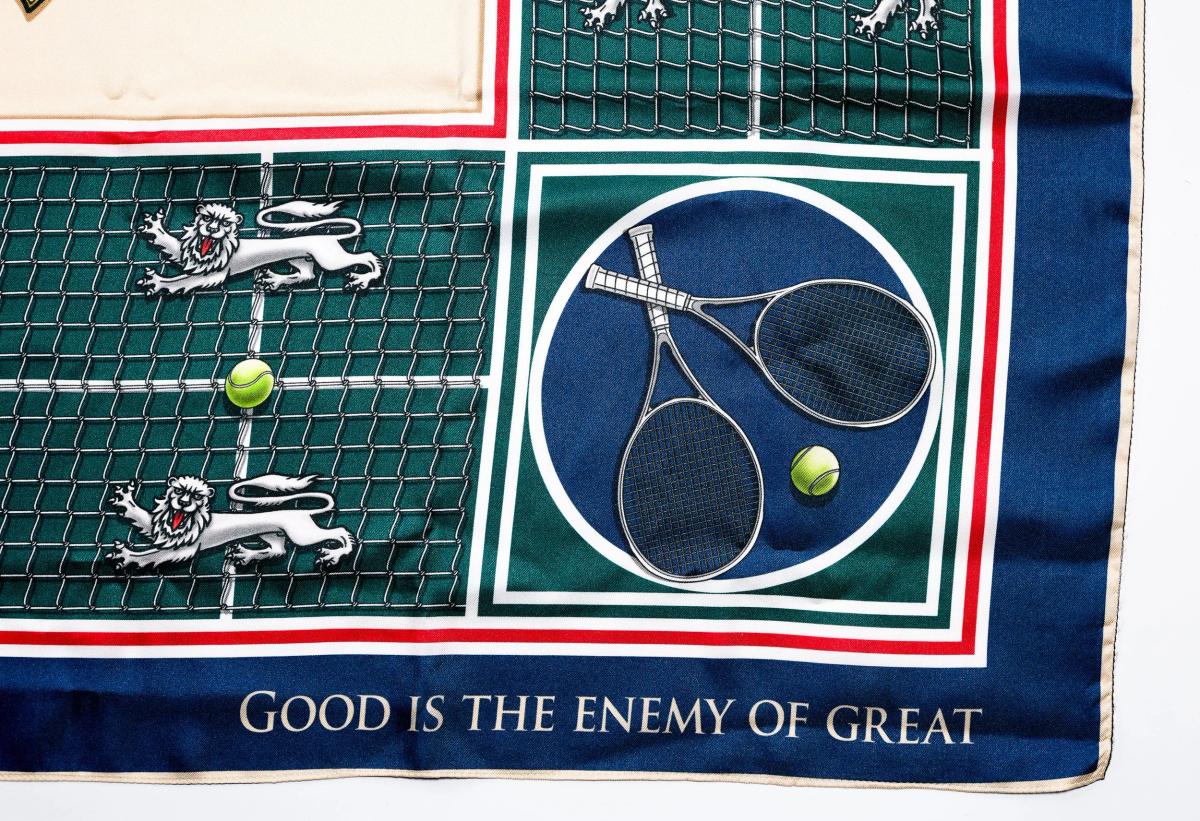
The choice of this specific motto links the object to a broader discourse on excellence and stewardship. By inscribing this creed onto the silk, the patron is making a statement about her own values and the values she wishes to transmit to the recipient. It suggests that stewardship is not a passive act of preservation, but an active pursuit of excellence. The steward must constantly strive to elevate the object, the institution, and the self from good to great.
The material substrate of the object, 14 Momme silk twill, further reinforces this message. Silk twill is a fabric known for its durability and its ability to hold rich pigment. It is a heritage material historically associated with luxury and permanence. However, in the PLCFA framework, the value of the silk lies not in its cost, but in its haptic resistance. It is a material that demands to be touched, folded, and worn. It has a physical presence that resists the dematerialization of the digital age. By choosing this material, the patron is validating the labor of the hand and the wisdom of the weave, rejecting the synthetic and the disposable.
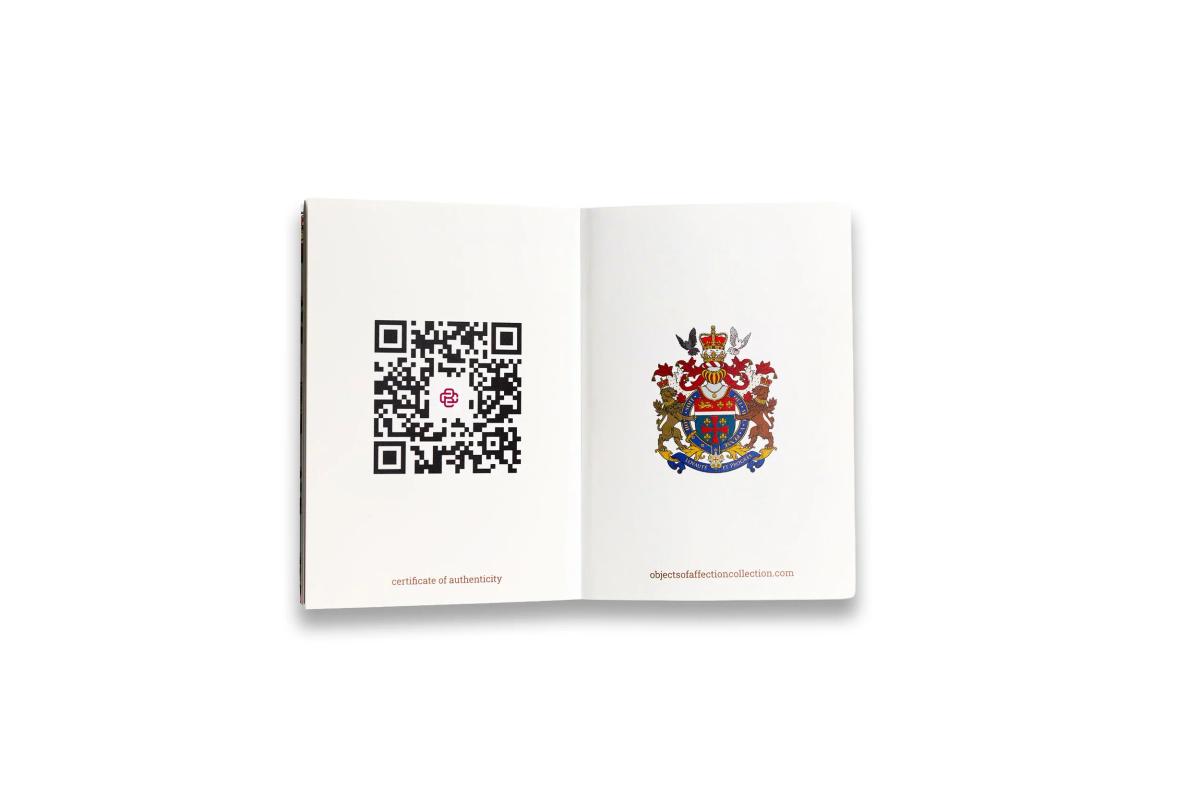
The One Original certification is the final, crucial element of the artifact’s design. By legally and contractually retiring the design DNA, the Objects of Affection Collection ensures absolute intellectual immunity. This stands in stark contrast to the Scarcity Paradox of traditional luxury, which relies on artificial scarcity to drive demand. Here, the scarcity is absolute and authentic. The object exists in a state of singularity. This One Original Promise disrupts the standard economic model of the art market. Instead, The Court of Tenacity relies on Triple-Link Validation, the unified possession of the physical scarf, the physical product book (documented by Lubrick), and the digital certificate, to secure its provenance.
The Mechanics of Patronage Validation: A Strategic Metric
To formalize Patronage Validation as a metric, we must move beyond the aesthetic analysis into the psychological and economic mechanics of the patron’s decision-making process. Patronage Validation is defined here as the quantifiable value placed on emotional permanence over market price. It is the specific shift in mindset that leads a high-level patron to define the value of an object based on its enduring narrative rather than its financial volatility. This shift is driven by a desire to escape the spectacle of the luxury market and to engage in a form of consumption that is ethically and intellectually defensible.
The Cost of Stewardship is the primary mechanism through which Patronage Validation is enacted. In the traditional luxury market, the cost of an object is its purchase price. In the PLCFA framework, the cost includes the Burden of Preservation: the ongoing responsibility to care for, store, and document the object. This burden is codified in the Custodian’s Contract, which transforms the buyer into a steward. By accepting this contract, the patron validates the object’s right to exist independent of its utility or market value.
This validation is quantifiable through the Semantic Value Equation, a proprietary formula developed by the Objects of Affection Collection to measure the true value of a PLCFA artifact. The equation breaks value down into three non-negotiable variables: Moral Weight, Temporal Lock, and Ceremonial Energy.
The Variable of Moral Weight
The Moral Weight of the artifact is derived from the 288 hours of meticulous hand-illustration that preceded its production. In the labor theory of value, time is money; in the PLCFA framework, time is moral authority. This metric, the Moral Weight per Material (MWPM), acknowledges that an object's value is directly proportional to the artist's physical investment. By explicitly auditing this labor, the contract forces the patron to confront the human cost of creation.
This is a direct application of the principles found in our analysis of Artistic Dark Matter, which argues for making invisible labor visible. The traditional luxury market often obscures the labor behind the "made in Italy" label. By contrast, the PLCFA framework brings the labor to the foreground, making it the primary source of value. The patron validates this labor by acknowledging it as the source of the object's soul.
The Variable of Temporal Lock
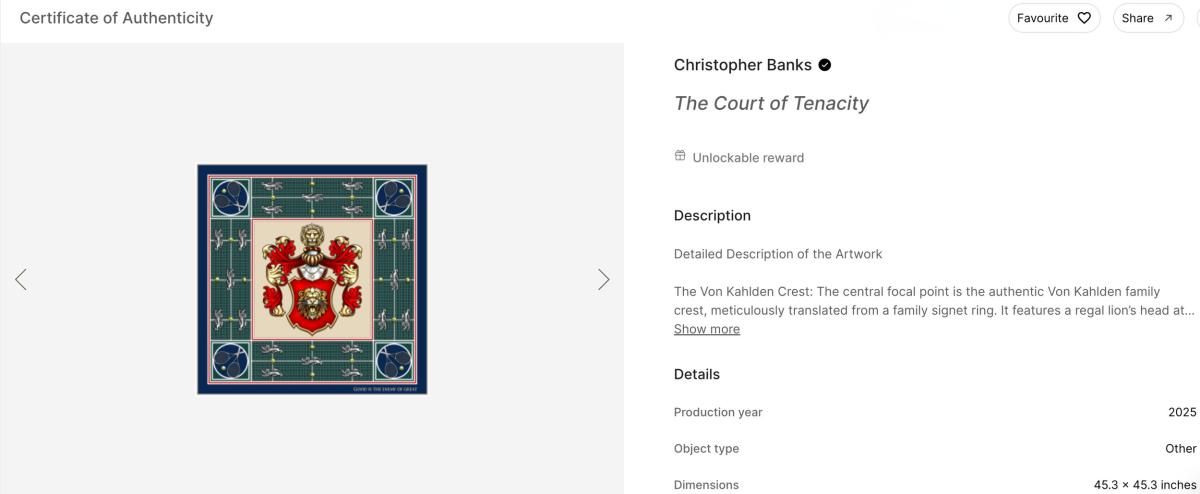
The Temporal Lock is the most radical component of the equation. The contract mandates a 1,825-day (5-year) holding period, during which the object is designated as an Anti-Speculative Entity. This Anti-Sale Covenant effectively removes the object from the market, stripping it of its liquidity. In traditional finance, an illiquid asset is a liability; in the economy of stewardship, illiquidity is the ultimate proof of commitment.
The five-year lock holds the object out of the market for the duration of its term. It is a constraint on transaction rather than a statement about it. This aligns with the Aesthetics of Endurance, utilizing legal constraints to force the object to persist in time, creating a temporal depth that the hyper-consuming society seeks to erode.
The Variable of Ceremonial Energy
The final variable, Ceremonial Energy, is activated during the Ceremony of Delivery. The protocol creates a ritualized space where the object is received with the gravity it commands. The silence, the narrative revelation, and the shared unfurling of the silk transform the scarf from a product into a vessel of memory.
This creates a Value Beyond Price, strictly interpersonal. This ritual is the mechanism of Patronage Validation. It creates a memory structure that binds the giver and receiver, making the object inalienable. The value generated in this moment cannot be transferred or sold; it can only be remembered.
Theoretical Scaffolding: The Three Foundational Pillars
The conclusions drawn from the analysis of The Court of Tenacity are supported by a seamless integration of three Foundational Studies. These studies provide the Academic Pincer required to defend the concept of Patronage Validation against the skepticism of the traditional market.
Pillar 1: The Aura's End and the Simulacrum of Luxury
The first pillar, The Aura's End, engages with the crisis of authenticity in the digital age. Mass reproduction has destroyed the ability of luxury goods to hold cult value. The simulacrum precedes the reality; the image of the bag is more valuable than the bag itself. The Court of Tenacity directly counters this dissolution through its One Original Promise, resurrecting the aura through physical and conceptual singularity.
Pillar 2: The Spectacle of Dissent and Artisan Activism
The second pillar, The Spectacle of Dissent, connects the commission to the political economy of the artisan. The Spectacle attempts to turn every act of rebellion into a product. The Court of Tenacity embodies material dissent: a refusal to settle for the "good enough" standards of the commercial market. By commissioning a work that requires 288 hours of labor, the patron validates slow labor as a form of Moral Capital.
Pillar 3: The Archival Mandate and the Biopolitics of the Artifact
The third pillar is The Archival Mandate. It argues that the museum and the archive are political mechanisms that often impose a "death mandate" on the artifact once it enters a collection. The Custodian’s Contract breaks this death mandate. By defining the recipient not as an owner but as a Custodian with a Burden of Preservation, the framework forces the object to remain "alive" through use and ritual.
Theoretical Synthesis: Foucault, Groys, and the Paradox of the New
The intellectual architecture of this study relies on a rigorous synthesis of critical theory, specifically the convergence of Michel Foucault’s Biopolitics and Boris Groys’s Archive Paradox. Foucault’s concept of biopolitics describes the mechanisms by which power manages the life of a population. In the museum context, the "collection" is the population, subject to thanatopolitics: the institutional right to kill the functional life of an object by placing it behind glass.
The Custodian’s Contract operates as a biopolitical countermeasure. It insists on the biopolitical vitality of the object. The Burden of Preservation placed on the custodian is not a mandate to "store" (death), but to "steward" (life). Boris Groys argues in The Archive Paradox that the archive consumes the very life it seeks to document. The Court of Tenacity disrupts this paradox by refusing to enter the public archive in the first place. The Temporal Lock and the Anti-Sale Covenant effectively keep the object in the private sphere.
The Triple-Link Validation creates a private archive that is self-contained and self-validating. The patron becomes the Archivist of the Self, using the object to curate their own lineage and memory, independent of the state or the market. The synthesis of these theories reveals that Patronage Validation is an act of resistance against the administrative rationality of the modern world. By valuing Moral Weight and Ceremonial Energy over Market Price, the patron is rejecting neoliberal governmentality.
The Burden of Preservation as the Ultimate Luxury
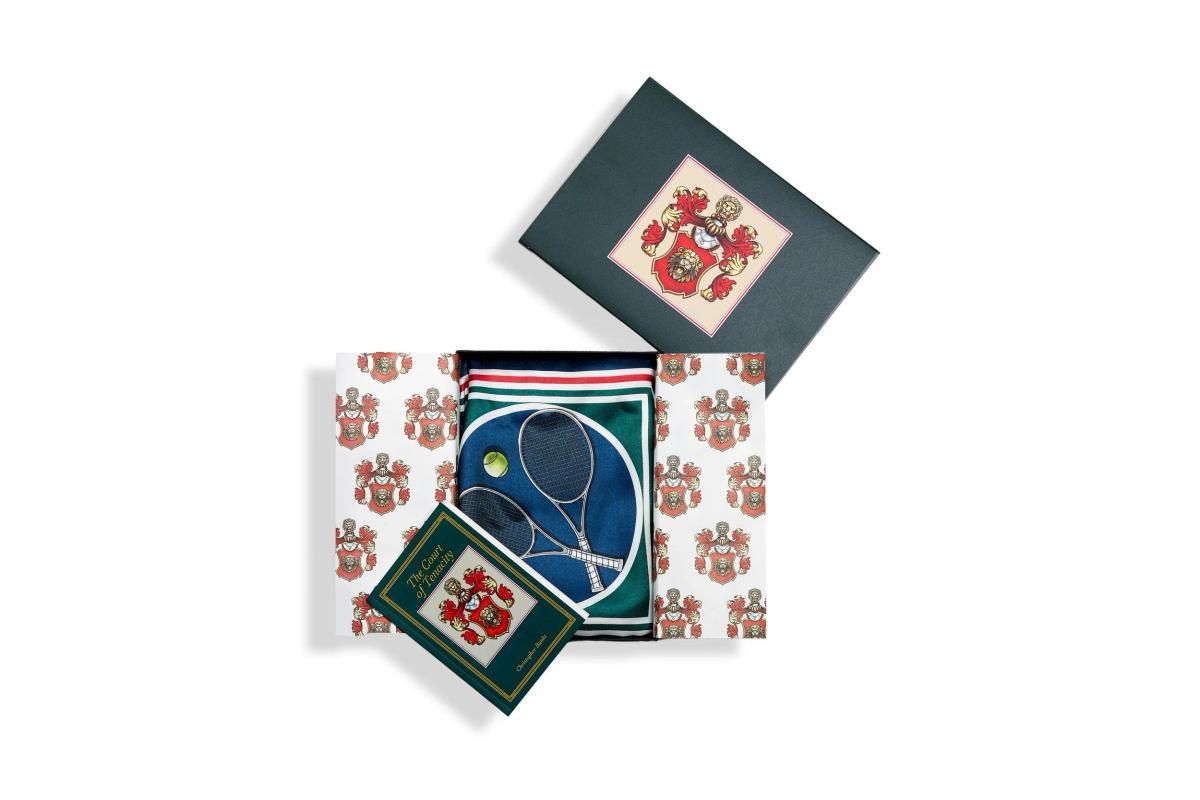
The study of The Court of Tenacity leads to a definitive conclusion: Patronage Validation is the strategic metric for the post-luxury economy. It quantifies the shift in mindset that leads a high-level patron to define value in terms of an enduring narrative rather than financial volatility. By choosing the Custodian’s Contract over traditional acquisition, the patron accepts the Burden of Preservation as a necessary component of value.
This shift is driven by a desire for emotional permanence in a world of radical ephemerality. The Epistemological Rupture between price and meaning is closed through the commitment of the steward. The patron who engages in this validation is not merely a consumer; they are a Cultural Custodian and an Artisan Activist, utilizing their capital to protect the humanity of the object.
Ultimately, the Cost of Stewardship is the willingness to surrender the freedom of the market (the right to sell) for the freedom of meaning (the right to keep). It is a recognition that the most valuable objects are those that cannot be sold at all, because their value is woven into the very fabric of the relationships they embody. The Court of Tenacity stands as a testament to this truth, a One Original that proves the greatest luxury of all is the ability to keep a promise.
Authored by Christopher Banks, Anthropologist of Luxury & Critical Theorist. Office of Critical Theory & Curatorial Strategy, Objects of Affection Collection.