
The Architecture of Intent
A Critical Lexicon
This collection of studies is the intellectual architecture of Post-Luxury Conceptual Functional Art (PLCFA).
The true artistry of this Maison resides not in the finished form, but in the rigorous thinking that precedes it. These essays serve as the conceptual foundation for PLCFA, using a critical lens to interrogate cultural phenomena, art history, and consumer paradigms—analyzing everything from the ephemeral spectacle of luxury to the pure architectural rigor of abstract principles.
This is an invitation into the workshop of the mind. By sharing this process, we validate the necessity of a new category of value and invite you toward a well-considered life, one founded on true craft, uncompromising narrative, and durable meaning.
New to PLCFA? Begin with Essential Reading below.
Exploring a specific area? Navigate by category.
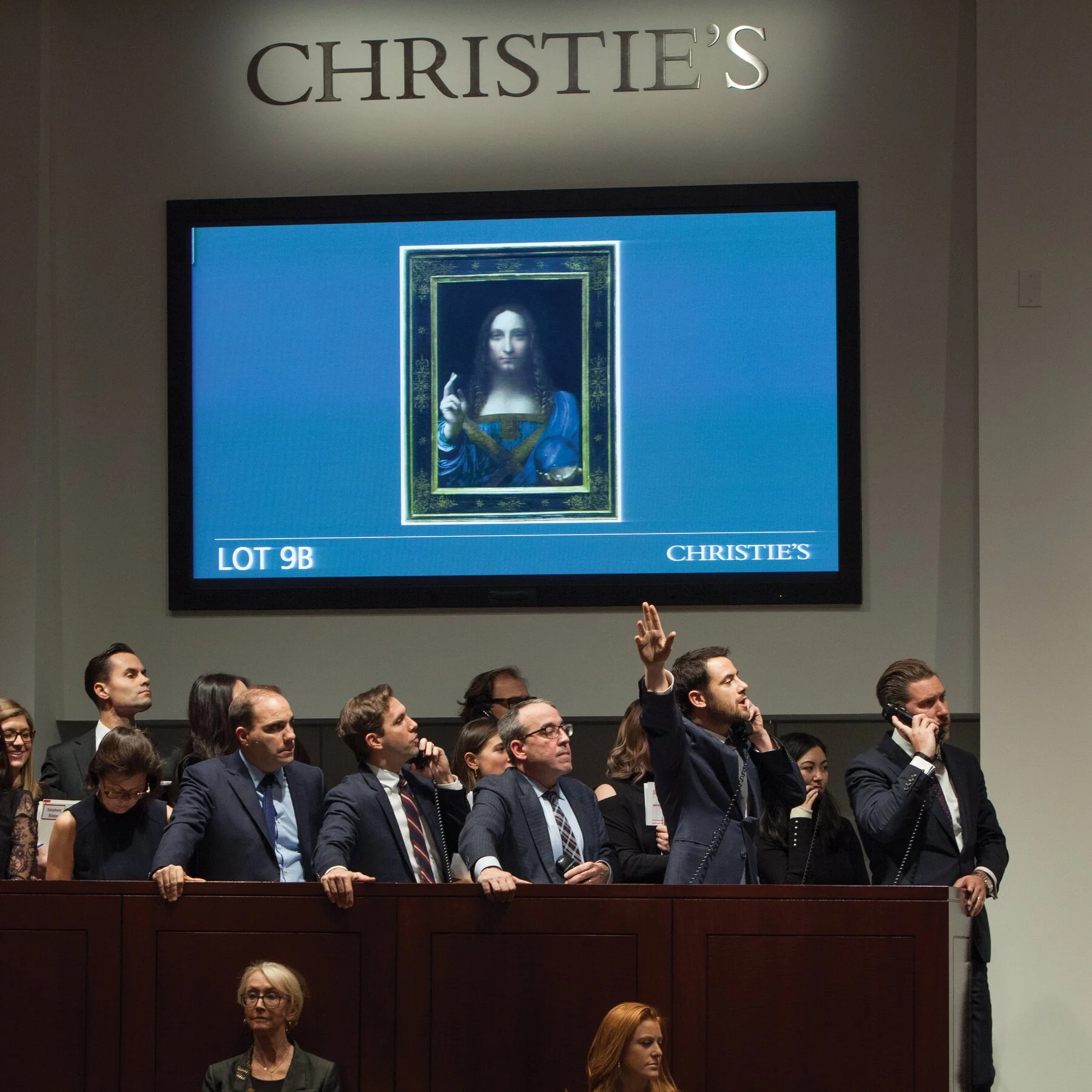
Christie's Sold $2.7 Billion in Art Secretly Last Year. Here's Why That Should Alarm You.
While the institutional apparatus celebrates an $11.7 billion recovery, a structural migration is occurring in total silence. Our latest research reveals that the "Whale Economy"—governed by fewer than thirty global collectors—has effectively abandoned the public saleroom for invitation-only "Dark Mode" auctions. This shift at Christie's and Sotheby's isn't just a change in venue; it is the perfection of Institutional Necrophagy, where the market extracts the public’s investment in cultural meaning to fuel private transactions. Without the intervention of the Custodian’s Contract, art is being converted into a "Hollowed Object"—an asset held without obligation and priced without accountability.
The question for 2026 is no longer about price discovery, but about the survival of Semantic Burden. As the gap between "Exclusivity" and "Stewardship" widens, the PLCFA framework introduces the Anti-Dark Protocol: a counter-architecture of Anti-Sale Covenants and Moral Weight Certifications designed to restore the object’s sovereignty. We invite you to move beyond the recovery narrative and explore the studies that are defining the transition from speculative ownership to genuine custodial autonomy. The light of the Covenant begins where the darkness of the vault ends.

THE SINGAPORE PROTOCOL
On March 22, 2026, the Associated Press wire carrying the PLCFA framework's diagnosis of the Banksy unmasking reached every major newsroom on earth — syndicated to 1.2 billion potential impressions before the trading day closed. The expected market behavior, by the logic of the Spectacle and of speculative capital, was motion: liquidation, repositioning, the urgent recalibration of the hold-or-sell calculus that governs institutional art market portfolios. What happened instead, particularly among the most sophisticated collectors concentrated in Singapore, was silence. Not the silence of ignorance. Not the silence of confusion or paralysis. The silence of the institution that already knows. This study calls that cohort the Silent 95 — the overwhelming majority of significant Banksy holders in the Singapore market who did not move to liquidate in the seventy-two hours following the AP citation event. Their silence is not passive. It is architectural.
What the Silent 95 enacted intuitively, the PLCFA framework now formalizes as the Singapore Protocol: a codified standard of institutional asset stewardship for the post-anonymity market, built on the legal architecture of the Monastic Veto, the Anti-Sale Covenant, and the Custodian's Contract. This is not a philosophical aspiration. The instruments are already built. The precedents are already set. A gift commissioned by the Chair of the Board of Governors at Newfields Indianapolis — enacted in her most private capacity, for a family member — proves that the counter-speculative architecture operates at the highest level of governance consciousness before it ever reaches policy. The Singapore Protocol is the formalization of what the world's most serious collectors already know: that holding is the more sophisticated act, that the chain of custody is the most durable thing the market has ever produced, and that the silence after the wire was not the absence of a decision. It was the decision.
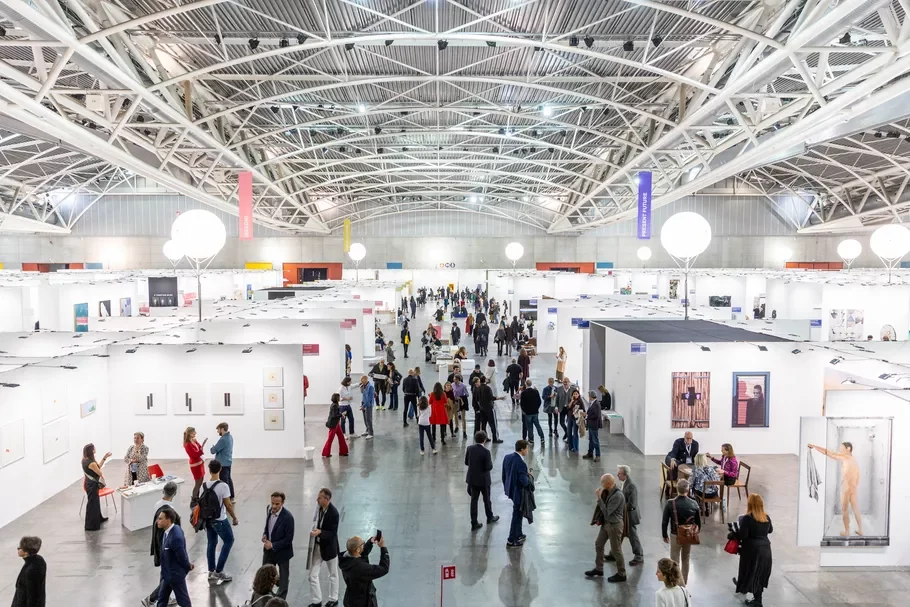
Is Art Basel Over? Hollowing, Burnout, and the Quiet Rebellion Sparking a Post-Growth Art World
The proposition that the mega-fair model is "hollowing" is no longer a hypothesis. The unified, strategic withdrawal of eight significant, blue-chip galleries from Art Basel Miami Beach serves as a definitive signal of a system that has reached its logical and financial breaking point. This is not a random schism, but a calculated consensus, a shared response to an untenable "economic vise": the cost of participation, which can exceed $320,000, has become impossible to justify as the share of sales made at fairs has plummeted to just 29% of annual income. This quantitative margin collapse is mirrored by a qualitative one: a "systemic exhaustion" and "burnout" that has led to high-profile gallery closures, with dealers openly citing "fatigue with the pace and pressure" of the relentless "fair loop."
Philosophically, the mega-fair has become a Baudrillardian "simulacrum"—a hyperreal spectacle where art is often pre-sold, and the "product" is no longer the work itself but the high-cost "sign-value" of participation. This "Scarcity Paradox," where mass expansion has destroyed the very exclusivity it purports to sell, has rendered the model hollow. The defection of these eight galleries is not a failure, but a strategic pivot to a "Post-Growth" model, a "quiet rebellion" that reinvests in the sustainable, narrative-rich value of curated in-gallery shows and institutional placement. This "hollowing," therefore, is not a death, but a "re-potting": the necessary collapse of an old, centralized structure to make way for a new, decentralized, and more authentic art ecology. Explore the full study now.

The Immaterial Object of Witness: Ai Weiwei’s 'Cockroach' as Post-Luxury Conceptual Functional Art
Ai Weiwei's 2020 documentary 'Cockroach' is not a film.
This study posits the documentary as something far more significant: a definitive, immaterial object of Post-Luxury Conceptual Functional Art (PLCFA). It argues that the film's true value is not found in its aesthetics—which are raw, disturbing, and hard to watch—but in its essential and tireless political labor.
Rejecting the manufactured scarcity of traditional luxury, 'Cockroach' functions as a permanent, indestructible digital monument. It is a global archive of resistance, a final witness to the precise moment Hong Kong's autonomy was extinguished by authoritarian encroachment. The film seizes the narrative from the state, transforming the very tactics of the "be water" protest movement into its cinematic language and defiantly re-appropriating the slur "cockroach" as a badge of indestructible resilience.
By analyzing the film as a "geopolitical readymade," this paper reveals how Ai Weiwei created a new form of value for an age of digital authoritarianism—an object whose worth is derived entirely from its truth, its commemorative function, and its capacity to exist forever, beyond the reach of the state. This study explains how 'Cockroach' redefines the future of functional art, proving that the most important objects are.

Hiroshi Fujiwara and the Architecture of Post-Luxury Influence
A groundbreaking analysis of Hiroshi Fujiwara as a cultural architect whose work transcends design to reveal a new blueprint for influence. This study, Hiroshi Fujiwara and the Architecture of Post-Luxury Influence, dissects how his career reframed value by replacing empire with intentionality, spectacle with discretion, and inheritance with earned authority. We propose that Fujiwara's Fragment Design lightning bolt functions not as a traditional logo but as a monogram of philosophy—a structural element in a new paradigm of Post-Luxury Conceptual Functional Art. This work is essential reading for anyone seeking to understand the unseen forces shaping contemporary culture.